

Tree health assessment is crucial for maintaining the beautiful and safe outdoor spaces we all desire. For homeowners and business owners alike, having healthy trees can provide numerous benefits:
- Clean air and oxygen
- Shade and cooling
- Home for wildlife
- Increased property value
However, the health of your trees is not just about aesthetics. It plays a massive role in the safety of your property, too. Unhealthy trees with decaying limbs can be a significant safety risk, potentially causing property damage or injury during storms.
In Tuscaloosa, AL, where nature’s beauty intertwines with our urban lives, keeping your trees in top condition is vital. Regular assessments help ensure that trees aren’t just surviving but thriving, providing all the advantages they are meant to deliver.
Understanding how and when to perform a tree health assessment is essential in nurturing and maintaining your green assets. If you want to keep your property safe and beautiful, paying attention to tree health is a must.
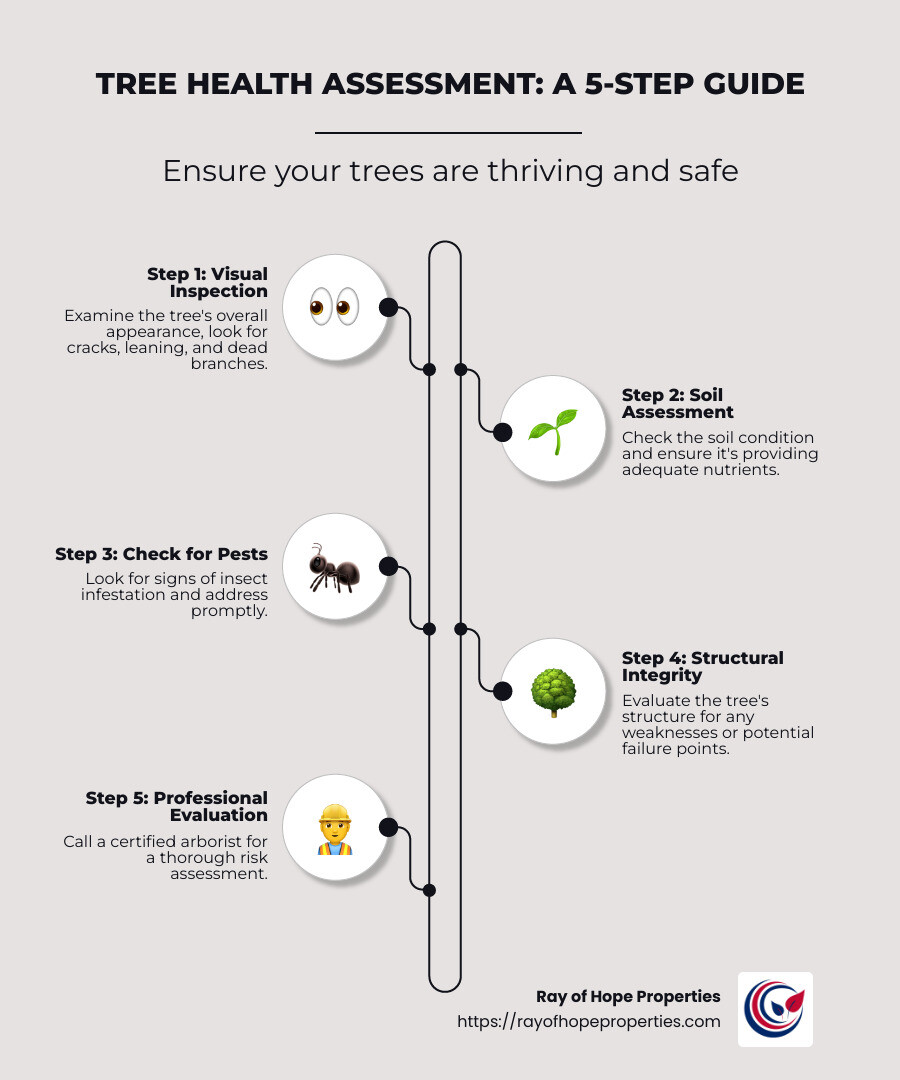
Tree health assessment definitions:
– Eco-friendly yard care
– Innovative landscape solutions
– Professional yard maintenance
What is Tree Health Assessment?
A tree health assessment is a systematic investigation into the condition of your trees. This process is essential for ensuring that trees on your property are not only healthy but also structurally sound.
Key Components of a Tree Health Assessment
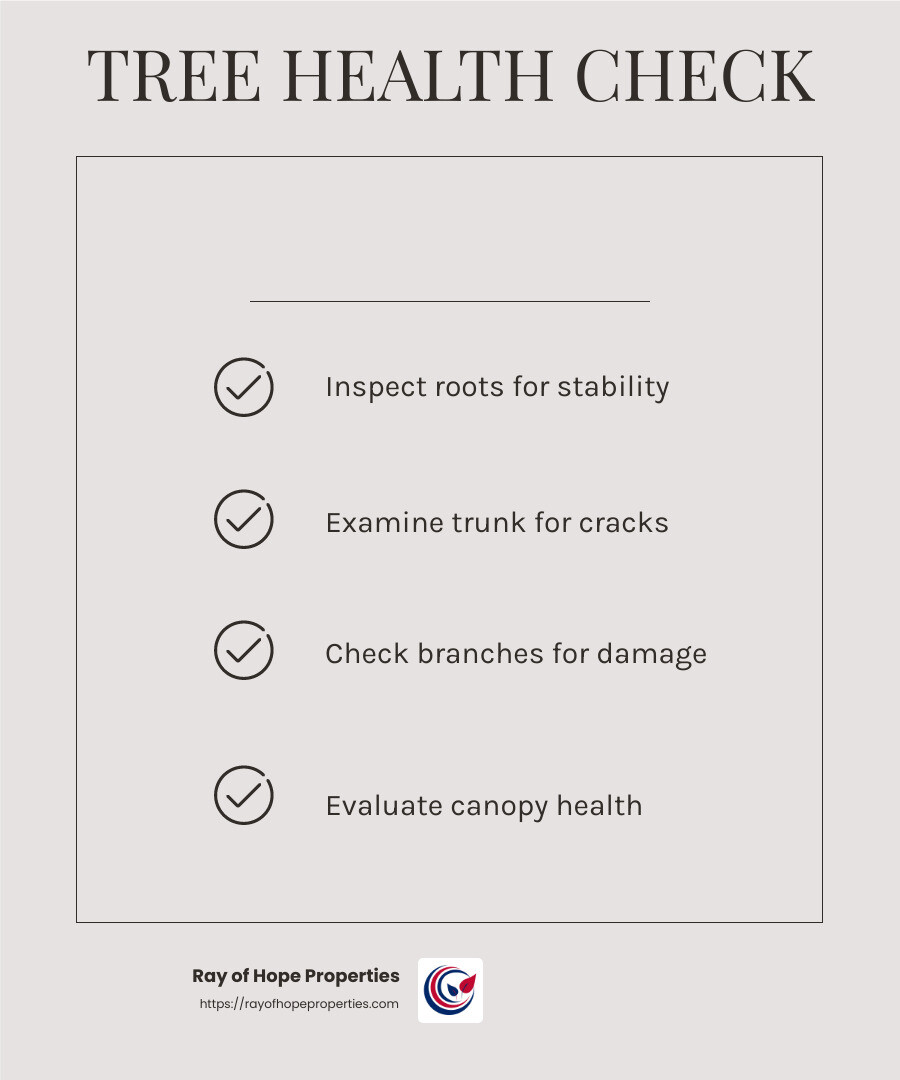
Systematic Investigation: This involves a thorough examination of every part of the tree. From the roots to the branches, each component is inspected to determine its health and integrity. This methodical approach helps identify potential risks early on, allowing for timely intervention.
Focus on Mature Trees: Trees that are over 20 years old, also known as mature trees, often require more attention. These trees have developed extensive root systems and large canopies, making them more susceptible to structural issues. Regular assessments help ensure they remain stable and healthy.
Structural Integrity: One of the primary concerns of a tree health assessment is the tree’s structural integrity. Trees can suffer damage from natural events like storms or even from age-related decay. Assessing structural integrity helps prevent accidents, such as falling branches or trees, which can cause property damage or injury.
In short, a tree health assessment is not just about keeping trees alive; it’s about ensuring they contribute positively to the environment and your property. Regular assessments can help identify problems before they become severe, ensuring the safety and beauty of your landscape.
By investing in regular assessments, you not only protect your property but also improve the beauty and value of your surroundings.
Why Perform a Tree Health Assessment?
Conducting a tree health assessment is crucial for several reasons, with community safety being at the forefront. Trees, while beautiful and beneficial, can pose significant risks if not properly maintained. Let’s explore why these assessments are essential.
Community Safety
Trees are vital to our environment, providing oxygen and enhancing property aesthetics. However, their large size means they can become hazardous if they fall or drop limbs unexpectedly. This can pose a threat to people, pets, and property. For instance, a tree with a weakened structure due to decay or disease could fall during a storm, endangering anyone nearby. Regular assessments help identify these risks early, allowing for preventive measures to be taken.
Structural Damage
Trees are susceptible to damage from natural events like storms, lightning, and heavy winds. Such events can compromise their structural integrity. A tree health assessment examines the tree’s structure, ensuring it is sound and stable. This is particularly important for mature trees, which are more likely to suffer from structural issues.
Imagine a scenario where a tree limb is hanging precariously over a public sidewalk. This situation is not just a risk to the tree’s health but also a liability to property owners. Early detection through assessments can prevent potential accidents and save on costly repairs.
Risk Factors
The risk associated with trees is largely determined by their location and condition. A tree near a high-traffic area, like a sidewalk or driveway, presents a higher risk if it has structural issues. During an assessment, arborists evaluate these risk factors to determine the likelihood of a tree or limb falling and causing damage. They consider factors like the tree’s size, weight, and proximity to people or structures.
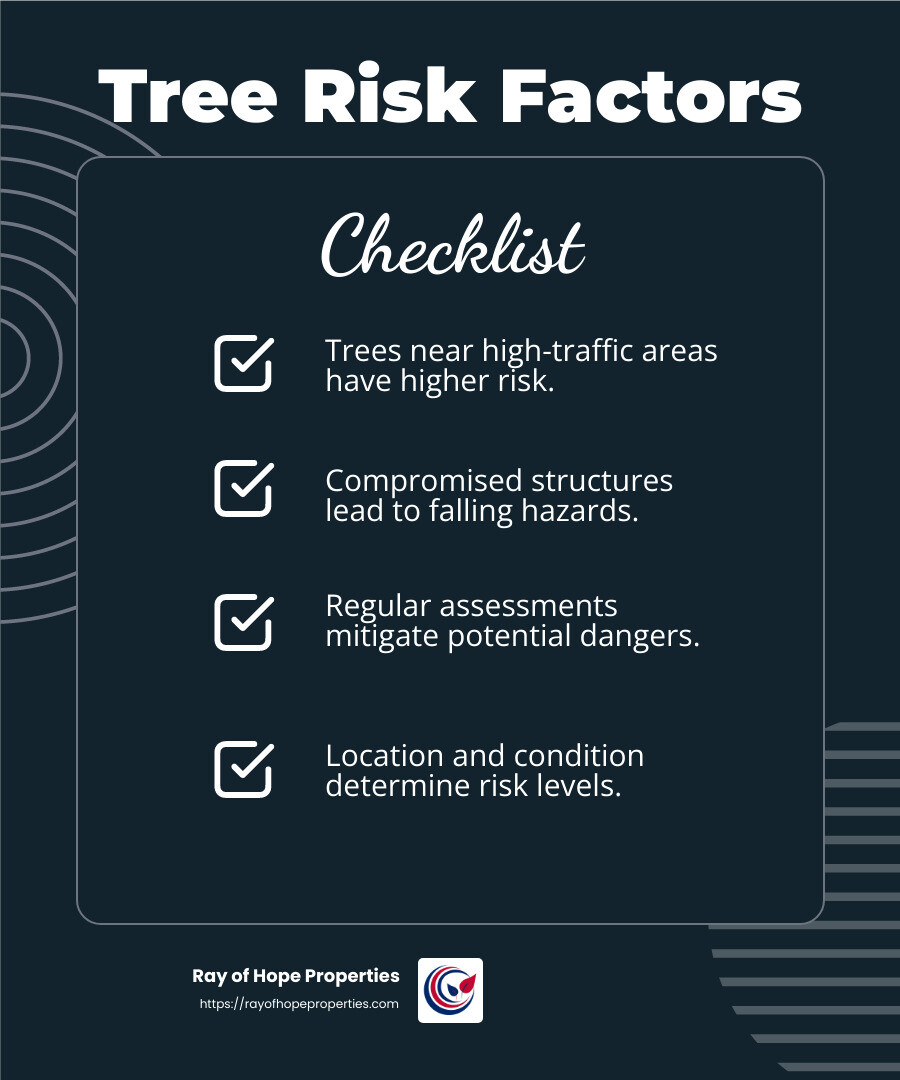
Statistics show that trees with defects, large branches, or those close to potential targets need immediate attention. Regular assessments help manage these risks effectively, ensuring that any necessary corrective actions, such as pruning or bracing, are taken promptly.
Performing a tree health assessment is not just about maintaining the aesthetic value of your trees. It’s about ensuring safety, preventing structural damage, and mitigating risks. By addressing these factors, you protect your property and contribute to a safer community environment.
Next, we’ll explore how to conduct a thorough tree health assessment, ensuring your trees remain healthy and safe.
How to Conduct a Tree Health Assessment
Performing a tree health assessment involves several key steps to ensure your trees are safe and thriving. Let’s break down the process into simple parts: visual inspections, soil assessments, and arborist evaluations.
Visual Inspections
A visual inspection is the first step in assessing tree health. This involves a careful look at the tree from top to bottom.
Check for Cracks: Look for any visible cracks in the bark. Cracks can weaken the tree’s structure and make it more vulnerable to pests and diseases.
Leaning Trees: Notice if the tree is leaning more than usual. Leaning can indicate root problems or a weakened structure.
Canopy Health: Observe the tree’s canopy. Thinning or discolored leaves can be a sign of poor health.
Branches and Limbs: Look for broken or dead branches. These can fall unexpectedly and pose safety risks.
Soil Assessments
Healthy soil is essential for tree growth. A soil assessment checks the condition of the soil around the tree.
Root Plate Issues: Inspect the root plate for signs of degradation or softening. This can make the tree unstable.
Fungi Growth: Look for fungi at the base of the tree. This can be an indicator of root decay.
Soil Condition: Check for compaction, which can restrict root growth. Compacted soil needs aeration to improve tree health.
Arborist Evaluation
For a comprehensive assessment, it’s best to consult a certified arborist. They have the expertise to evaluate tree health and recommend solutions.
Use of Tools: Arborists use tools like rubber mallets for “sounding” the tree and probes for checking cavities. These tools help detect hidden issues not visible to the naked eye.
Advanced Techniques: In some cases, they may use advanced techniques like resistance drilling or sonic tomography to assess internal conditions.
Professional Recommendations: Arborists provide insights on necessary actions, such as pruning, bracing, or even removal if the tree poses a significant risk.
By combining visual inspections, soil assessments, and arborist evaluations, you can ensure a thorough tree health assessment. This approach not only identifies potential hazards but also helps maintain the beauty and safety of your trees.
Next, we’ll look at the signs of an unhealthy tree, so you know when to take action.
Signs of an Unhealthy Tree
Recognizing the signs of an unhealthy tree is crucial for maintaining the safety and beauty of your property. Let’s explore some key indicators that your tree may need attention.
Cracks
Cracks in a tree’s bark can be more than just a cosmetic issue. They often signal structural problems. According to research, cracks can extend into the wood, making the tree vulnerable to further damage. Shear cracks run vertically with the grain, while ribbed cracks form as the tree tries to heal itself. If you spot multiple cracks or a large crack on a branch over 4 inches in diameter, it’s a high-risk sign that the tree might fail.
Leaning
A leaning tree might seem picturesque, but it can indicate serious root problems. Leaning often occurs when roots loosen from the soil. Over time, this can worsen, especially after storms or heavy winds. If a tree leans significantly, it might need cabling or even removal.
Root Issues
Roots are the foundation of a tree’s health. Root plate issues can make the tree unstable, and root girdling—where roots encircle the trunk—can choke the tree. Look for signs like fungi growth at the base, which points to root decay. Raised soil on one side of the trunk can also indicate instability.
Insects
Insects can damage a tree from the inside out. They often go unnoticed until significant harm is done. Signs include bite marks or holes in leaves. Early detection by an arborist can prevent insects from causing irreversible damage.
Decay
Decay weakens a tree’s structure. It often starts with a wound and progresses through stages like stain and rot. Look for loose bark, mushrooms, or conks on the trunk, which indicate decay. If decay affects more than 40% of the trunk’s circumference, the tree has a high risk of failure.
By keeping an eye out for these signs, you can catch problems early and take action to protect your trees. Up next, we’ll explore the different levels of tree health assessment and risk management.
Tree Health Assessment Levels
When it comes to understanding the health and safety of your trees, tree health assessments are a must. These assessments are divided into three levels, each offering a different depth of inspection and analysis.
Level 1: Limited Visual Assessments
Level 1 assessments are the quickest way to get a general idea of tree health. Arborists perform these assessments by either driving or walking through an area, such as a street or park. They look for obvious signs of high-risk trees, like dead branches or severe leaning. This level is about speed and coverage, not detail. It helps identify which trees or areas might need more attention with a Level 2 or Level 3 assessment.
Level 2: Basic Assessments
Level 2 assessments are more thorough. Arborists walk around each tree, inspecting it from all sides. They use tools like rubber mallets for “sounding” to check for internal decay and probes for cavities. This level includes a closer look at defects and the surrounding environment. If a tree shows significant issues, a Level 2 assessment might recommend a Level 3 assessment for deeper investigation. Findings from Level 2 are usually compiled into a risk assessment and mitigation report.
Level 3: Advanced Assessments
For trees with serious concerns, Level 3 assessments go the furthest. These involve detailed inspections of a tree’s roots, stem, or crown. Techniques like climbing inspections, resistance drilling, and sonic tomography are used to uncover hidden problems. These advanced methods help determine the tree’s internal condition and structural integrity. The results are detailed in a comprehensive tree risk assessment report, which includes all observations, test results, and recommended actions like mitigation, maintenance, or removal.
Risk Assessment
Risk assessment is a critical part of the tree health assessment process at all levels. It evaluates three main factors: the risk of failure, the size and weight of the tree or limb, and the likelihood of hitting a target, such as people or property. Each factor is rated on a scale, and combined to rank the tree’s overall risk. This helps prioritize which trees need immediate attention and what actions to take.
Understanding these levels helps you decide when and how to assess your trees, ensuring their health and safety while protecting your property. Next, we’ll discuss when it’s time to call in a professional arborist.
When to Call an Arborist
Knowing when to call in a professional arborist is crucial for maintaining the health and safety of your trees. Regular assessments and seasonal checks are key to catching problems early and avoiding expensive damage later.
Regular Assessments
Arborists recommend scheduling tree health assessments every three years. Regular assessments help catch issues like decay or structural weakness before they become serious. Consistent check-ups ensure your trees remain healthy and provide the benefits you expect, like shade, beauty, and property value.
Seasonal Checks
Different seasons bring different challenges for trees. Spring is an ideal time for a check-up because the leaf canopies haven’t fully filled in yet. This makes it easier to spot structural issues, like broken branches or signs of winter damage. Fall is another good time for an assessment, as it prepares your trees for the winter months.
Tip: If your area experiences extreme weather, like heavy storms or droughts, it’s wise to have an arborist look at your trees as soon as possible afterward.
Certified Professionals
When hiring an arborist, make sure they are certified. Certified professionals have the training and experience to spot problems that might not be obvious. They use advanced tools and techniques to thoroughly evaluate tree health and provide reliable solutions.
A certified arborist can also perform a risk assessment, determining if your tree poses any potential threats to people or property. This expertise is invaluable in ensuring your trees are safe and healthy for years to come.
By understanding when to call an arborist, you can take proactive steps to maintain the health and safety of your trees. Next, we’ll explore some frequently asked questions about tree health assessments.
Frequently Asked Questions about Tree Health Assessment
How often should tree health assessments be performed?
The frequency of tree health assessments can make a big difference in maintaining the health and safety of your trees. Experts recommend conducting these assessments every three years. Regular check-ups help identify issues like decay or structural weaknesses before they become major problems.
However, if your area has experienced extreme weather conditions like storms or droughts, it’s wise to have an arborist evaluate your trees as soon as possible afterward. This extra step can prevent unexpected damage and maintain the benefits your trees provide.
What are the costs associated with tree health assessments?
The cost of a tree health assessment can vary depending on several factors, including the size and condition of the tree, as well as the scope of the assessment. Typically, you might expect to pay between $40 to $450.
Some arborists may offer a basic assessment for free, but these often do not include a formal report. If you need a detailed evaluation or risk assessment, be prepared for additional costs. It’s always a good idea to discuss fees upfront to avoid surprises.
Does tree health assessment include risk assessment?
A tree health assessment primarily focuses on the health and condition of your tree. However, a risk assessment can be included if requested. This involves evaluating the potential risks your tree may pose to people or property, such as falling branches or structural instability.
Including a risk assessment might increase the overall cost, but it provides peace of mind by identifying potential hazards. A certified arborist is equipped to perform both health and risk assessments, ensuring your trees are safe and well-maintained.
Conclusion
At Ray of Hope Properties, we are passionate about maintaining the health and beauty of your trees through eco-friendly solutions. Trees are not just a part of your landscape; they are vital to your property’s safety and environmental health. Regular tree health assessments are essential in ensuring your trees remain strong and vibrant, providing shade, beauty, and cleaner air for years to come.
Our team in Tuscaloosa, AL, is dedicated to sustainable landscaping practices that prioritize both the health of your trees and the environment. By implementing personalized strategies, we improve your property’s curb appeal while minimizing ecological impact. Our experts use organic methods and cutting-edge techniques to keep your trees in top shape, reducing the need for chemical interventions and promoting long-term sustainability.
Whether you’re concerned about potential risks or simply want to maintain the lushness of your landscape, we’re here to help. Our certified professionals are ready to assist with regular assessments, seasonal checks, and any tree health concerns you might have.
For personalized, eco-friendly landscaping services, visit our Tree and Shrub Trimming Services in Tuscaloosa, AL page. Let us transform your outdoor space into a thriving, healthy environment you’ll love.
A healthy tree is a happy tree. And at Ray of Hope Properties, we’re committed to keeping your trees—and your property—at their best.


