

Tree care and maintenance is vital for the health of our environment, from the trees lining the streets of Tuscaloosa to the vast forests around the world. Trees not only beautify our surroundings but also provide crucial benefits like air purification, carbon capture, and protection against climate extremes.
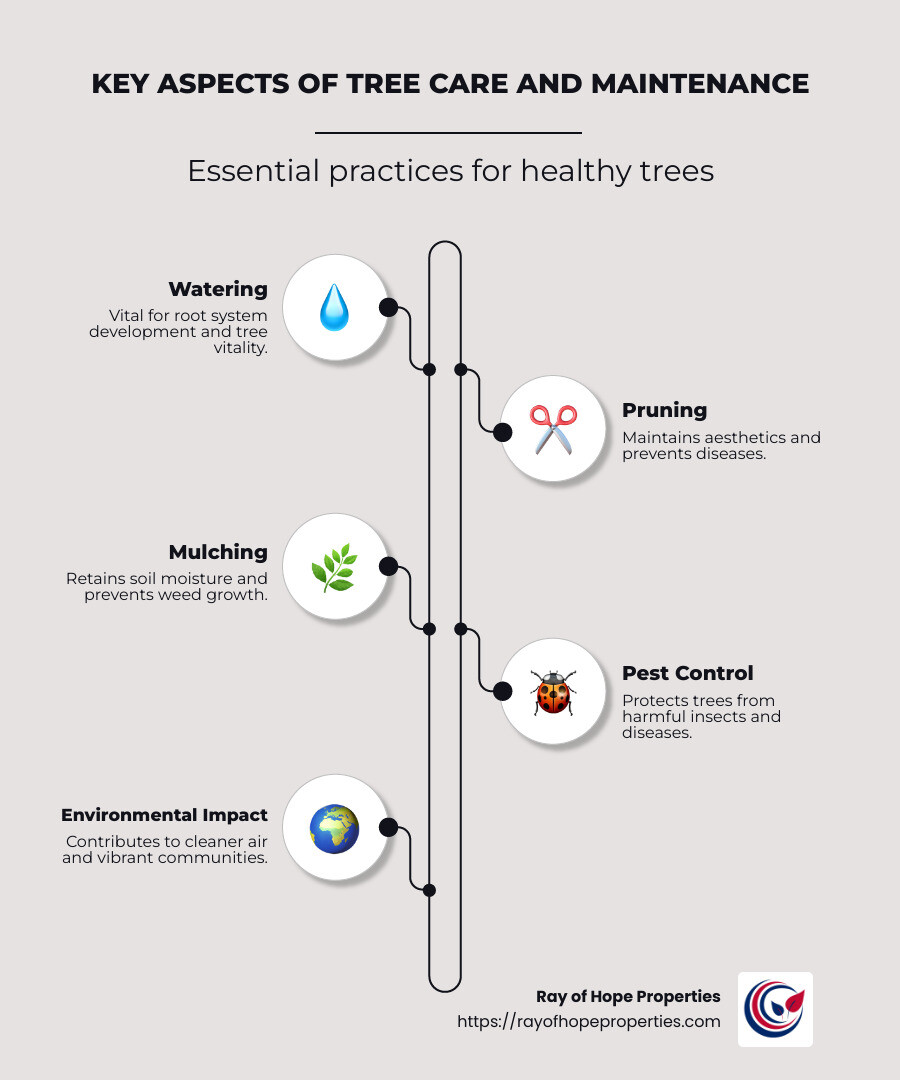
Key Aspects of Tree Care and Maintenance:
– Watering: Essential for root system development and tree vitality.
– Pruning: Maintains aesthetics and prevents diseases.
– Mulching: Retains soil moisture and prevents weed growth.
– Pest Control: Protects trees from harmful insects and diseases.
Caring for our trees helps sustain a healthy environment and improves urban landscapes. Simple practices on a micro level, like in your business’s yard, collectively contribute to global sustainability. Healthy trees mean cleaner air, better carbon capture, and more vibrant communities.
Understanding the importance of tree care and maintenance is the first step to a greener, more sustainable world. Let’s take small actions locally to create a significant impact globally.
Glossary for Tree care and maintenance:
– Tree health assessment
– Eco-friendly yard care
– Professional yard maintenance
Choosing the Right Tree
Selecting the right tree for your yard or property is a crucial step in ensuring the success of tree care and maintenance. It all begins with understanding the purpose of the tree and the environment where it will be planted.
Tree Purpose
First, ask yourself why you are planting the tree. Trees can serve many purposes:
- Aesthetics: Some people plant trees to improve the beauty of their property. In this case, consider trees with colorful blooms or unique foliage.
- Privacy: If your goal is to create a natural barrier, evergreen trees are a great choice because they keep their leaves year-round.
- Shade and Energy Reduction: Large deciduous trees provide cooling shade in the summer. Plant them on the southeast, southwest, and west sides of your home to maximize their cooling effects.
- Windbreak: Evergreens planted to the north can block cold winds in winter, providing a natural windbreak.
Planting Site Considerations
Once you know the purpose of your tree, the next step is to evaluate the planting site. Here are some factors to keep in mind:
- Space: Ensure there is enough room for the tree to grow to its full height and spread. This prevents future issues with sidewalks, power lines, and buildings.
- Soil Conditions: Different trees thrive in different soil types. Conduct a soil test to determine if the soil pH and nutrient levels are suitable for your chosen tree.
- Sun Exposure: Some trees need full sun, while others thrive in partial shade. Make sure the site matches the tree’s sunlight needs.
- Hardiness Zone: Check the hardiness zone of your location to ensure the tree can withstand the local climate. Tuscaloosa, AL, for example, falls within USDA Zone 8a, which influences which trees will thrive there.
Right Tree, Right Place
It’s important to match the tree to its environment. For instance, short flowering trees are ideal under utility lines, as they won’t interfere with overhead wires. On the other hand, large trees need ample space to grow without obstructing views or structures.

The success of a tree’s growth and health hinges on the right choice and careful planning. By considering the purpose, site, and specific needs of the tree, you set the stage for successful tree care and maintenance. This careful selection process ensures that your tree will not only survive but thrive, providing benefits for years to come.
In the next section, we’ll dig into the essential practices of tree care and maintenance, including watering, mulching, fertilizing, pruning, and pest control. Understanding these elements will help you keep your trees healthy and vibrant throughout their lifespan.
Tree Care and Maintenance
Taking care of your trees involves a few key practices: watering, mulching, fertilizing, pruning, and pest control. Each step is crucial for the tree’s health and longevity.
Watering
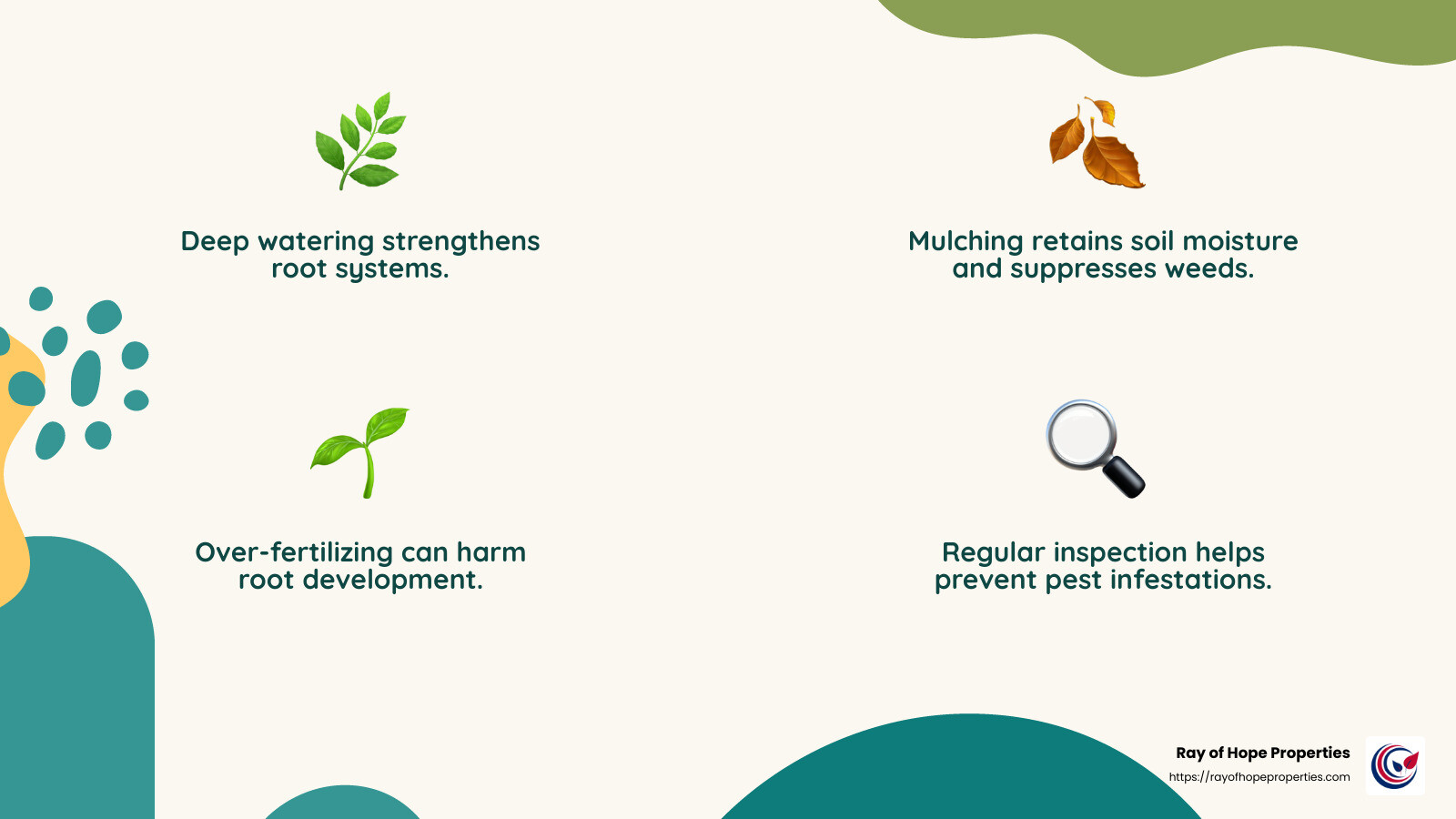
Watering is fundamental to tree health. Unlike grass, trees prefer deep watering. This encourages roots to grow deep into the soil, making the tree sturdier. In Tuscaloosa, AL, where summers can be hot, deep watering is particularly important. Use a soak hose or water slowly for a few hours to ensure the water reaches the base of the roots. Check the soil’s moisture by sticking your finger into the ground under the tree’s drip line.
Mulching
Mulching provides multiple benefits. It retains soil moisture, controls temperature, and suppresses weeds. Apply a 2-3 inch layer of organic mulch, like wood chips or bark, around the tree’s base. Keep the mulch a few inches away from the trunk to prevent rot. In sandy soils, increase the layer to 4 inches for better soil integrity. Mulching not only helps in maintaining hydration but also enriches the soil as it decomposes.
Fertilizing
Fertilizing should be approached with caution. Most trees don’t need fertilizers, especially when young. Over-fertilizing can harm root development. If you suspect a nutrient deficiency, test the soil’s pH first. Trees typically thrive in soil with a pH between 5.5 and 7.0. If necessary, consult with a tree care professional to determine the right course of action.
Pruning
Pruning keeps trees healthy and safe. Regularly remove dead, broken, or diseased branches to prevent decay and encourage proper growth. Pruning also improves air circulation within the tree’s canopy, making it stronger and more beautiful. The goal is to maintain the tree’s natural shape without over-pruning, which can weaken the tree.
Pest Control
Pest control is about prevention. Regularly inspect your trees for signs of pests or diseases. Keeping trees healthy through proper watering, mulching, and pruning reduces the likelihood of pest infestations. If you notice any issues, address them quickly. Sometimes, professional help is needed to manage severe infestations.
By focusing on these core areas of tree care and maintenance, you ensure that your trees remain healthy and vibrant, providing beauty and benefits to your property for years to come.
Next, we’ll explore how seasonal changes affect tree care and what you can do to adapt your practices throughout the year.
Seasonal Tree Care Tips
Spring Care
Spring is the perfect time to inspect your trees after the cold season. Look for any signs of pests, insects, or diseases. Early detection is crucial because these issues can quickly worsen. If you spot any problems, act immediately to prevent long-term damage.
Also, check for branches damaged by snow or wind. Trim any dead or problematic limbs to promote healthy growth. This not only improves the tree’s appearance but also prevents potential hazards.
Summer Hydration
Summer can be tough on trees, especially in hot climates like Tuscaloosa, AL. Keeping trees hydrated is essential. For new trees, consistent watering is crucial. Use a soak hose or water slowly to ensure deep soil penetration. This helps roots grow strong and deep.
Mulch is your best friend in summer. It helps retain moisture and keeps the soil cool. Apply a generous layer around the tree’s base, but keep it away from the trunk to avoid rot. This simple step can make a big difference in maintaining tree health during dry spells.
Fall Pruning
In fall, focus on preparing your trees for winter. Pruning is key. Remove any dead or weak branches that might not withstand heavy snow. This reduces the risk of branches snapping and causing damage.
Also, clear fallen leaves from around the tree. Too much leaf debris can attract pests and lead to infestations. By keeping the area clean, you help your trees stay healthy and ready for the coming cold.
Winter Protection
Winter can be harsh, but with the right care, your trees can thrive. For vulnerable trees, remove any fallen leaves and debris to minimize disease risk. Keep an eye on the bark for discoloration or disease signs.
In late winter, consider trimming overgrown limbs. This encourages new growth in spring. Proper winter care ensures your trees emerge healthy and strong when the warmer weather returns.
By adapting your tree care and maintenance practices to each season, you help your trees flourish all year round. Next, we’ll dive into some common questions about tree care and how to address them effectively.
Frequently Asked Questions about Tree Care and Maintenance
How do you maintain a tree?
Maintaining a tree is like giving it regular check-ups. Watering, pruning, and pest control are the basics.
Watering: Trees need water, but not too much. Deep watering once a week is usually enough, especially if it doesn’t rain. This helps roots grow deep and strong.
Pruning: Trimming dead or overgrown branches keeps the tree healthy. Do major pruning in winter when the tree is dormant. In summer, focus on removing small dead branches.
Pest Control: Keep an eye out for pests. Look for holes in leaves or chew marks. If you see signs, take action quickly. Sometimes, natural predators can help, or you might need a treatment.
How do I make my tree healthy again?
If your tree’s looking a bit under the weather, there are a few things you can do to help.
Proper Environment: Make sure the tree has enough space and sunlight. Check that it’s not planted too deep. The trunk should be above the soil line.
Fertilizing: Trees in yards might miss out on natural nutrients. Use a slow-release fertilizer to feed them. This helps the soil stay rich and your tree strong.
Pruning: Remove dead branches to give the tree a fresh start. This can improve its structure and health.
Who can tell me what’s wrong with my tree?
Sometimes, it’s best to call in the experts.
Arborist Consultation: If you’re worried about your tree, consult an arborist. These professionals know how to spot signs of trouble, like discolored leaves or cankers.
Tree Diagnosis: An arborist can diagnose what’s wrong and suggest treatments. They might notice things you missed, like pests or diseases.
By understanding these basics, you can keep your trees healthy and happy. Whether you’re doing it yourself or calling in a pro, proper tree care and maintenance ensures they thrive. Next, let’s explore some common misconceptions about tree care.
Conclusion
At Ray of Hope Properties, we believe that every tree deserves the best care. Our approach to tree care and maintenance is rooted in personalized solutions and eco-friendly practices. We understand that each property is unique, and so are the needs of its trees.
Personalized Solutions
Our team of experts in Tuscaloosa, AL, is dedicated to crafting custom plans that suit your specific landscape. Whether it’s selecting the right tree for your yard, designing a maintenance schedule, or addressing specific tree health issues, we provide solutions that work for you. We know that a one-size-fits-all approach doesn’t work for tree care, so we take the time to understand your needs and preferences.
Eco-Friendly Practices
Sustainability is at the heart of what we do. We use organic fertilizers and promote natural pest control methods to ensure that our tree care practices are kind to the environment. By using native plants and efficient irrigation systems, we help create landscapes that are not only beautiful but also sustainable.
Choosing Ray of Hope Properties means choosing a partner who cares about the health of your trees and the environment. We are committed to enhancing the curb appeal and functionality of your property while minimizing environmental impact.
If you’re ready to transform your outdoor space with expert tree care and maintenance, contact us today. Our team is eager to help you create a thriving landscape that you can enjoy for years to come.


