

Mulch for garden pathways offers a practical and visually appealing solution for your outdoor space. If you’re wondering how to improve your garden’s paths while also reaping additional benefits, here is a quick guide:
- Benefits:
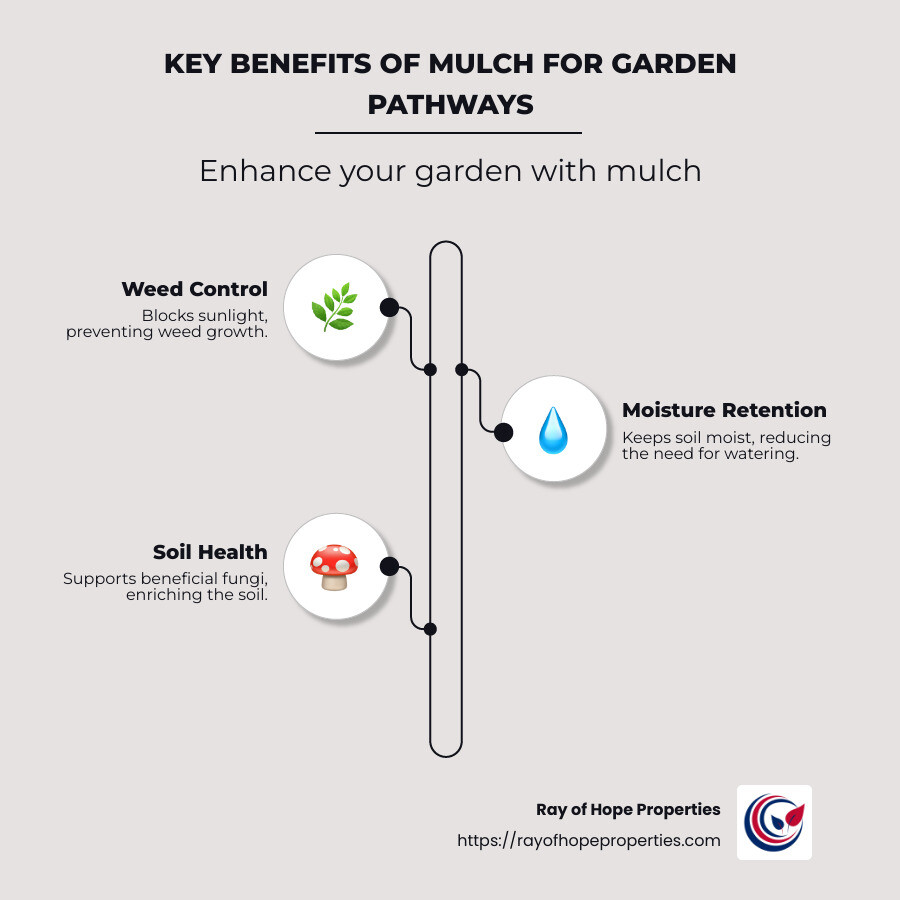
- Weed Control: Mulch inhibits weed growth by blocking sunlight.
- Moisture Retention: Retains soil moisture, reducing the need for frequent watering.
- Soil Health: Supports beneficial fungi that enrich the soil.
Creating beautifully maintained garden paths doesn’t have to be a chore. For busy individuals who want to boost curb appeal but lack the time or expertise, choosing the right mulch can transform any garden or business frontage into an inviting oasis. The right mulch not only makes the pathways look neat and tidy but also contributes to a healthier landscape overall.
People with busy schedules might appreciate this easy, low-maintenance solution. Mulching pathways not only makes yards more visually appealing but also offers protection against weeds, helps retain moisture, and improves soil quality. Not to mention, it minimizes maintenance time—an attractive benefit for anyone juggling a busy schedule.
Mulch for garden pathways terms simplified:
– Mulch delivery and spreading
– Mulch for erosion control
– Mulch for weed prevention
Why Mulch Your Garden Paths?
When it comes to maintaining your garden, mulch for garden pathways is a game-changer. It doesn’t just make your paths look neat; it also brings a host of benefits. Let’s explore why mulching is a smart choice for your garden paths.
Weed Control
Mulch acts as a natural barrier against weeds. By covering the soil, it blocks sunlight, which weeds need to grow. This means fewer weeds popping up in your garden, saving you time and effort in the long run.
Soil Moisture
Keeping your soil moist is crucial for healthy plants. Mulch helps by reducing water evaporation from the soil. This means your plants get the moisture they need without you having to water them constantly. It’s a win-win for both your plants and your water bill!
Beneficial Fungi
One of the lesser-known perks of mulching is how it supports beneficial fungi. These fungi break down the mulch, enriching the soil with nutrients. They also help spread water and nutrients more efficiently to your plants, acting like an extension of the roots.
In areas where weather can be unpredictable, having this natural support system in your soil can make a big difference. Mulch pathways not only improve the aesthetic appeal of your garden but also contribute significantly to its health and sustainability.
By choosing to mulch your garden paths, you’re investing in a healthier, more vibrant garden. It’s an easy way to keep the garden looking great with minimal effort.
Types of Mulch for Garden Pathways
Choosing the right type of mulch is essential for creating effective and attractive garden pathways. Each type of mulch has its own unique benefits and considerations. Let’s explore some popular options: wood chips, straw or hay, fall leaves, and sawdust.
Wood Chips
Wood chips are a classic choice for garden paths. They provide a natural look and are great for suppressing weeds. Wood chips also support beneficial fungi, which enrich the soil and help plants thrive. A bonus: they are often available for free from local tree trimming services. Just remember to avoid using wood chips in areas with poor drainage, as they can become soggy.
Straw or Hay
Straw and hay offer a light, airy mulch option. They are excellent for soil moisture retention and can help prevent soil erosion. However, it’s crucial to source straw or hay from organic suppliers. Some may contain herbicides that could harm your garden. It’s a good idea to check their origin to ensure they’re safe for use.
Wild Tip: Straw or hay may have been sprayed with harmful chemicals that could hurt your garden. Be careful where you get yours from, and if possible, make sure it’s from an organic source.
Fall Leaves
Fall leaves are a fantastic, eco-friendly mulch option. They are readily available in many areas and can be used to create a soft, natural-looking path. As they decompose, they add valuable nutrients to the soil. To prevent them from blowing away, you might need to chop them up or mix them with another type of mulch, like wood chips.
Sawdust
Sawdust can be a cost-effective mulch for pathways, especially if you have access to a local sawmill. It offers a clean, uniform appearance and is great for suppressing weeds. However, fresh sawdust is acidic, so it’s best to let it decompose for a year before using it. Also, ensure the sawdust is from untreated wood to avoid introducing harmful chemicals into your garden.
Pro Tip: Sawdust can also be used as mulch or on pathways in the garden and yard.
Each type of mulch has its merits, and the best choice often depends on what’s readily available in your area. By using mulch on your garden paths, you’re not just enhancing their look but also contributing to a healthier garden ecosystem.
Next, we’ll cover how to install mulch pathways effectively, ensuring they last and continue to benefit your garden.
How to Install Mulch Pathways
Creating beautiful and functional garden pathways with mulch is a straightforward process. With the right techniques, your paths will not only look great but also support your garden’s health. Here’s how to get started:
Sheet-Mulching
Sheet-mulching is a simple method to prepare your garden paths. It involves layering materials that decompose over time, enriching the soil.
- Clear the Area: Start by removing any existing vegetation, like grass or weeds. This creates a clean slate for your path.
- Layer with Cardboard or Newspaper: Lay down sheets of cardboard or several layers of newspaper. This layer will smother any remaining weeds and grass. Make sure to overlap the edges to prevent gaps.
- Add Organic Material: On top of the cardboard, add a layer of compost or well-rotted manure. This will kickstart the decomposition process and enrich the soil below.
- Top with Mulch: Finally, cover everything with your chosen mulch, such as wood chips or fall leaves. Aim for a depth of about 3 inches to effectively suppress weeds and retain moisture.
Landscape Fabric
Using landscape fabric is another effective way to install mulch pathways. It acts as a barrier to weeds while allowing water to pass through.
- Prepare the Path: Similar to sheet-mulching, begin by clearing the area of any vegetation.
- Lay the Fabric: Roll out the landscape fabric along your path. Make sure to overlap the edges by a few inches to prevent weeds from sneaking through.
- Secure the Fabric: Use landscape staples to hold the fabric in place. This will keep it from shifting as you walk on the path.
- Add Mulch: Spread your chosen mulch over the fabric, ensuring a depth of around 3 inches. This will weigh down the fabric and provide a natural look.
Maintenance Tips
To keep your mulch pathways looking their best, a little maintenance goes a long way.
- Replenish Mulch: Over time, mulch breaks down and compresses. Plan to add fresh mulch every two to five years to maintain a 3-inch depth.
- Check for Weeds: Occasionally, weeds may find their way through. Regularly inspect your paths and remove any weeds promptly.
- Monitor Drainage: If you notice water pooling, consider adding more mulch or improving drainage to prevent soggy conditions.
By following these steps, you’ll create durable and attractive mulch pathways that improve your garden’s beauty and health. In the next section, we’ll address some frequently asked questions about mulch for garden pathways.
Frequently Asked Questions about Mulch for Garden Pathways
When it comes to mulch for garden pathways, there are common questions many gardeners have. Let’s explore the most frequently asked ones:
What kind of mulch is best for garden paths?
Wood Mulches are a popular choice for garden paths. They provide a natural look that blends seamlessly with the garden environment. Wood chips, in particular, are excellent because they support beneficial fungi. These fungi aid in breaking down the mulch and enrich the soil, acting like an extension of your plants’ roots.
- Natural Look: Wood chips offer a rustic and earthy appearance that improves the visual appeal of garden paths.
- Availability: Fall leaves and straw or hay are also good options, especially if they are readily available in your area.
Is mulch good for walking paths?
Absolutely! Mulching your garden paths is not only good for aesthetics but also for practicality.
- Time-Saving: Mulched paths require less maintenance than grassy paths. You won’t need to mow or trim them, saving you time and effort.
- Beneficial Fungi: As mentioned, mulch supports fungi that help distribute water and nutrients throughout your garden, promoting healthier plant growth.
What are the disadvantages of mulching?
While mulching has many benefits, it’s important to be aware of potential drawbacks.
- Over-Mulching: Too much mulch can suffocate plant roots and prevent water and air from reaching the soil. Always aim for a depth of about 3 inches.
- Pests: Some gardeners worry about mulch attracting pests like slugs and snails. However, as noted in our research, predators of these pests, such as ground beetles and centipedes, also thrive in mulch, helping to keep pest numbers in check.
By understanding these aspects, you can make informed decisions about using mulch in your garden pathways. Next, we’ll explore more eco-friendly solutions and personalized landscaping options offered by Ray of Hope Properties.
Conclusion
At Ray of Hope Properties, we believe that creating beautiful and functional outdoor spaces doesn’t have to harm the environment. Our commitment to eco-friendly solutions ensures that your garden not only looks good but also supports local biodiversity and conserves resources.
Personalized Landscaping is at the heart of what we do. Every garden is unique, and we tailor our services to meet your specific needs. Whether you’re looking to create a lush, inviting pathway with mulch for garden pathways or need a complete landscape redesign, our team is here to help.
Our expert team uses sustainable practices that align with nature, such as using organic materials for mulching. This not only improves the visual appeal of your paths but also improves soil health and supports beneficial organisms. By choosing us, you’re investing in a garden that is both resilient and environmentally responsible.
If you’re ready to transform your outdoor space with personalized, eco-friendly landscaping, contact Ray of Hope Properties today. Let us help you create a garden that is a true extension of your home and a haven for local wildlife.
Together, we can cultivate a sustainable oasis that you, your family, and the environment will enjoy for years to come.


