

Mulch for flower beds is the ultimate garden game-changer. With a simple addition, you can transform not just the look but the health of your flower garden. If you’re in a hurry, here’s what mulch does:
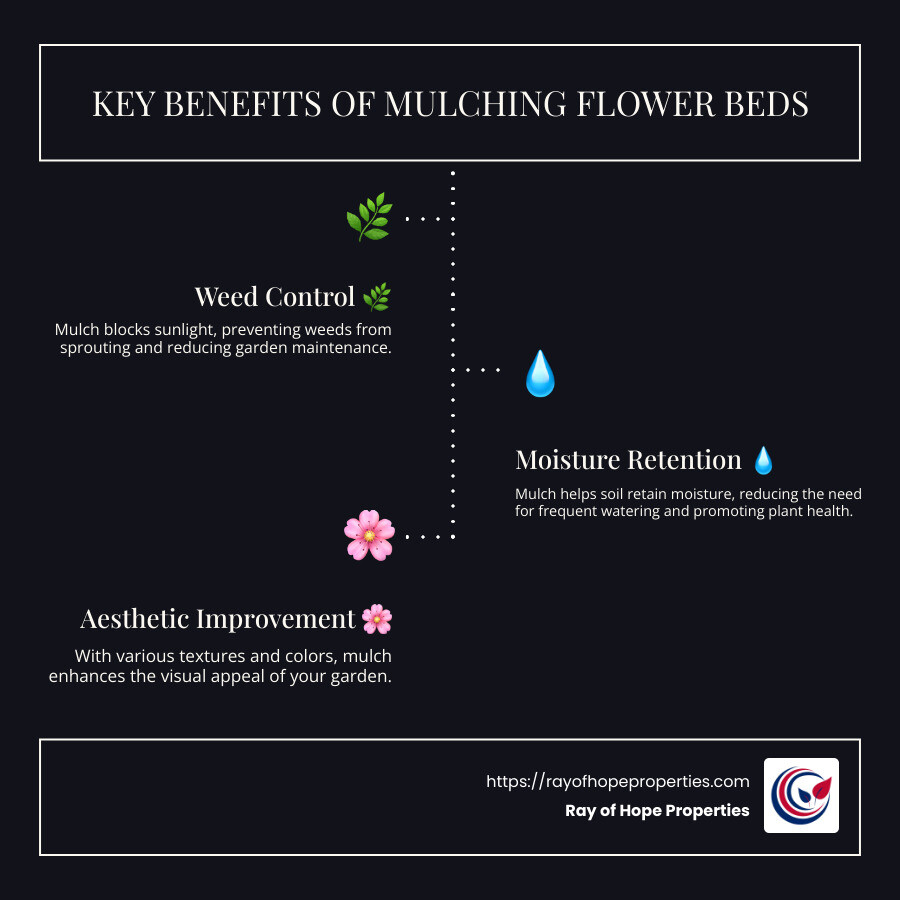
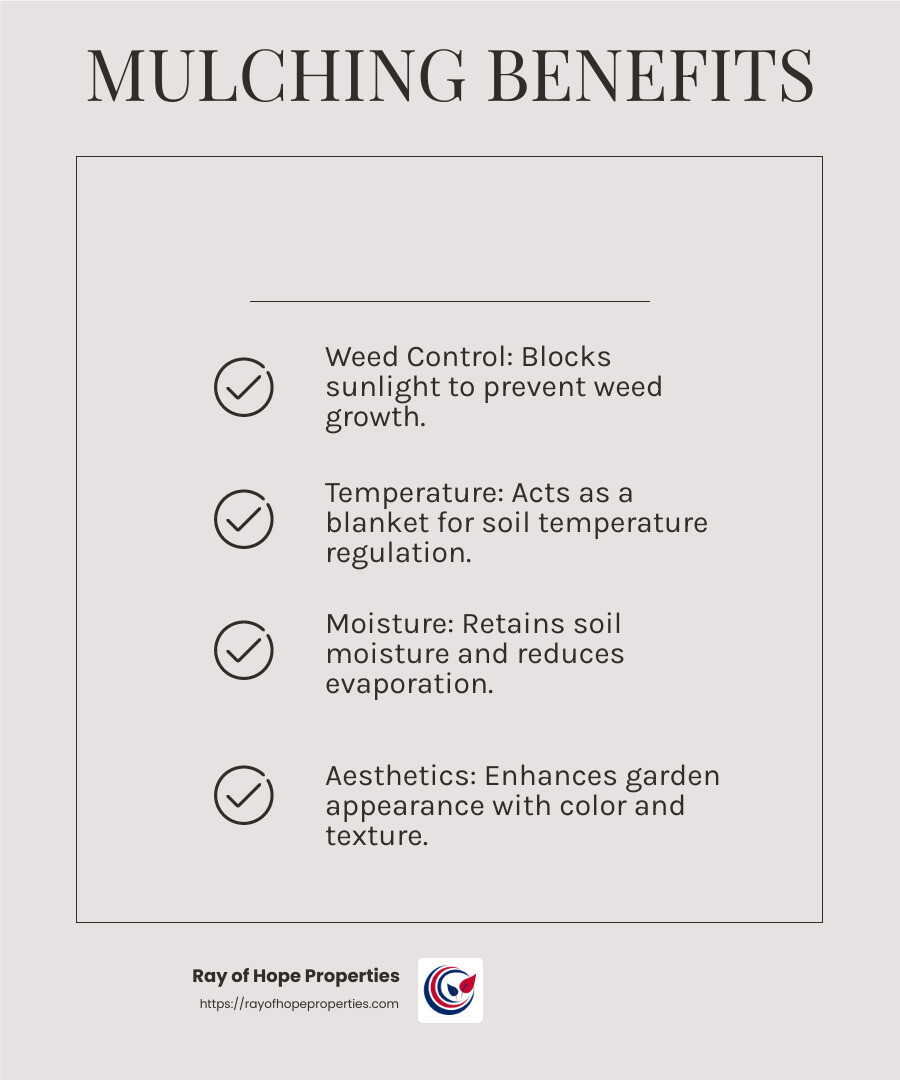
- Controls weeds by blocking sunlight, making it harder for them to sprout.
- Regulates soil temperature to keep roots cool in summer and warm in winter.
- Retains moisture, reducing the need for frequent watering.
- Improves soil structure as it breaks down over time.
- Improves garden aesthetics with various textures and colors.
Imagine your garden looking better while requiring less maintenance. Mulch offers both beauty and practicality, much like my favorite saying, “mulch is like the icing on the cake.” Whether you’re planning your garden’s debut or revamping it to impress clients, the aesthetic appeal of a well-mulched bed goes a long way. It won’t just boost your curb appeal but also invite nature’s symphony of butterflies and bees.
Ready to explore mulching and make your flower beds the star of the neighborhood? Let’s dive deeper!
Mulch for flower beds vocab explained:
– Mulch delivery and spreading
– Mulch for erosion control
– Mulch for weed prevention
Types of Mulch for Flower Beds
When it comes to mulch for flower beds, you have a variety of options to choose from. Let’s break them down into two main categories: organic and inorganic mulches.
Organic Mulch
Organic mulches are made from natural materials. They decompose over time, enriching your soil with nutrients.
- Wood Chips and Bark Mulch: These are popular choices for flower beds. Wood chips and bark mulch not only add a neat appearance but also improve soil health as they break down. Cedar and eucalyptus mulches are excellent for water retention and pest control. However, avoid freshly ground mulch as it can release too much nitrogen.
- Grass Clippings: If you mow your lawn, you have access to a free mulch source. Grass clippings help retain moisture and add nitrogen to your soil. Just make sure they are herbicide-free and weed-free. Mix them with carbon-rich materials like shredded leaves or newspaper for balance.
- Cocoa Chip Mulch: Made from cocoa bean hulls, this mulch gives off a pleasant chocolatey scent. It’s great for water retention and adds nutrients but decomposes quickly, so apply it sparingly to avoid mold.
- Recycled Paper: Cardboard and shredded newspaper can suppress weeds effectively. Use them as a base layer topped with another mulch type to prevent them from blowing away.
- Straw: This is a budget-friendly option, though it can look unattractive as it ages. Ensure it’s seed-free to prevent unwanted growth in your flower beds.
Inorganic Mulch
Inorganic mulches do not decompose, so they don’t improve soil fertility but are long-lasting.
- Rubber Mulch: Made from recycled tires, rubber mulch is durable and doesn’t decompose. However, it can be toxic and isn’t recommended for flower beds focused on soil health.
Choosing the right mulch depends on what you want to achieve in your flower garden. Organic mulches are excellent for improving soil health, while inorganic options offer durability and low maintenance.
Now that you know the types of mulch available, let’s move on to best practices for using them effectively in your flower beds.
Best Practices for Mulching Flower Beds
When applying mulch for flower beds, follow best practices to maximize its benefits. Let’s explore some key aspects: weed control, soil temperature regulation, moisture retention, soil improvement, and aesthetic improvement.
Weed Control
Mulch is a gardener’s best friend when it comes to suppressing weeds. A thick layer of mulch blocks sunlight, preventing weed seeds from germinating. Use organic options like wood chips or bark mulch for effective weed control. Aim for a 2-3 inch layer to keep those pesky weeds at bay.
Soil Temperature Regulation
Mulch acts like a cozy blanket for your flower beds. It keeps the soil cool in summer and warm in winter, protecting plant roots from extreme temperature fluctuations. For optimal temperature regulation, consider using shredded hardwood or bark mulch.
Moisture Retention
One of mulch’s superpowers is its ability to retain soil moisture. By reducing evaporation, mulch ensures your plants stay hydrated longer. This means less frequent watering, saving you time and resources. Cocoa chip mulch and grass clippings are particularly effective for moisture retention.
Soil Improvement
Organic mulches like compost and shredded leaves decompose over time, enriching the soil with nutrients. This process improves soil structure and fertility, creating a healthier environment for your plants to thrive. Remember to replenish organic mulch annually to maintain its benefits.
Aesthetic Improvement
Mulch isn’t just functional; it also boosts the visual appeal of your garden. With various colors and textures available, you can choose a mulch that complements your flowers and improves your garden’s overall look. As the saying goes, “mulch is like the icing on the cake.” It adds the perfect finishing touch to your flower beds.
By following these best practices, you’ll create a beautiful and thriving garden environment. Next, let’s explore how to apply mulch effectively in your flower beds.
How to Apply Mulch for Flower Beds
Applying mulch for flower beds is more than just spreading it around. To maximize its benefits, you need to consider timing, preparation, application techniques, and mulch thickness.
Timing
The best time to apply mulch is mid- to late spring. By this time, the soil has warmed up, and your plants are starting to grow. Mulching too early can keep the soil too cool, slowing down plant growth.
Preparation
Before you start mulching, prepare your flower beds:
- Clean Up: Remove any weeds, dead plants, and debris from the area. This ensures that the mulch will be effective in weed control and soil improvement.
- Fluff Existing Mulch: If you have old mulch, rake it to break up any compacted areas. This helps water and air reach the soil.
- Water the Soil: Make sure the soil is moist before applying mulch. This helps the mulch retain moisture and support plant growth.
Application Techniques
When applying mulch, consider these techniques for the best results:
- Even Distribution: Spread mulch evenly across the flower bed. Use a garden fork or your hands to ensure it covers the soil without clumping.
- Keep Away from Stems: Leave a small gap around the base of each plant. This prevents rot and allows the plant to breathe.
- Avoid Volcano Mulching: Do not pile mulch against tree trunks or plant stems. This can cause disease and pest issues.
Mulch Thickness
The thickness of your mulch layer is crucial:
- 2-3 Inches: This is the ideal thickness for most flower beds. It provides effective weed control, moisture retention, and temperature regulation.
- Avoid Over-Mulching: More is not always better. Too much mulch can suffocate plants and prevent oxygen from reaching the roots.
By following these steps, you’ll ensure your flower beds are not only beautiful but also healthy and thriving. Now that you know how to apply mulch effectively, let’s move on to answering some common questions about mulching flower beds.
Frequently Asked Questions about Mulch for Flower Beds
What type of mulch is best for flower beds?
Choosing the right type of mulch can make a big difference in the health and beauty of your flower beds. Organic mulches like wood chips, straw, leaves, and compost are excellent choices. They break down over time, adding nutrients to the soil and improving its structure.
- Wood Chips: These are great for moisture retention and weed suppression. They also add a natural look to your garden.
- Straw: Straw is lightweight and easy to spread. It’s effective in preventing soil erosion and can be a good option if you want a quick, temporary mulch.
- Leaves: Using shredded leaves as mulch is both cost-effective and environmentally friendly. They decompose to enrich the soil with organic matter.
- Compost: Compost not only acts as a mulch but also enriches the soil with nutrients, boosting plant growth.
Should you put mulch on flower beds?
Absolutely! Mulching your flower beds offers several benefits:
- Soil Erosion Prevention: Mulch acts as a protective layer, reducing the impact of rain and wind on the soil surface.
- Moisture Barrier: It helps retain soil moisture by reducing evaporation, ensuring your plants get the water they need without frequent watering.
- Weed Growth Prevention: A thick layer of mulch blocks sunlight, preventing weed seeds from germinating and taking over your garden.
What month is the best time to mulch?
The ideal time to apply mulch is mid- to late spring. By this time, the soil has warmed up, which is crucial for plant growth. Applying mulch too early can keep the soil too cool, slowing down the growth of your plants.
Timing is key to maximizing the benefits of mulch, such as moisture retention and temperature regulation. Make sure to consider plant growth stages when planning your mulching schedule.
By understanding these aspects of mulching, you can create a thriving and beautiful flower garden. Ready to explore more about mulching techniques? Let’s explore the next section.
Conclusion
At Ray of Hope Properties, we believe that creating beautiful outdoor spaces should never come at the expense of the environment. Our commitment to eco-friendly solutions ensures that your flower beds not only look stunning but also contribute positively to the ecosystem. By choosing mulch for flower beds that is both organic and sustainable, we promote healthier soil, conserve water, and support local biodiversity.
Our personalized approach to landscaping means that we tailor every project to your specific needs. Whether you want to improve the curb appeal of your home or create a lush haven for your commercial property, our team is here to bring your vision to life. We understand that every garden is unique, and we pride ourselves on delivering results that reflect your style and preferences.
Our expertise in sustainable landscaping practices ensures that your garden not only thrives but also requires less maintenance over time. By using organic materials that decompose naturally, we enrich the soil and reduce the need for chemical interventions. This holistic approach not only benefits your garden but also contributes to a healthier environment.
Ready to transform your flower beds with our expert mulching services? Find how Ray of Hope Properties can help you create a vibrant and sustainable outdoor space today.
Join us in our mission to improve landscapes while preserving the natural beauty of Tuscaloosa. Together, we can create gardens that are not only visually appealing but also resilient and eco-friendly.


