

Mulch for erosion control is a vital tool in landscaping, especially for those struggling with soil stabilization issues. If you’re dealing with erosion on your construction or home site, mulching could be your answer. It helps in managing water runoff, retaining soil moisture, and regulating soil temperature, creating an ideal environment for plant growth.
Here are key reasons to use mulch for erosion control:
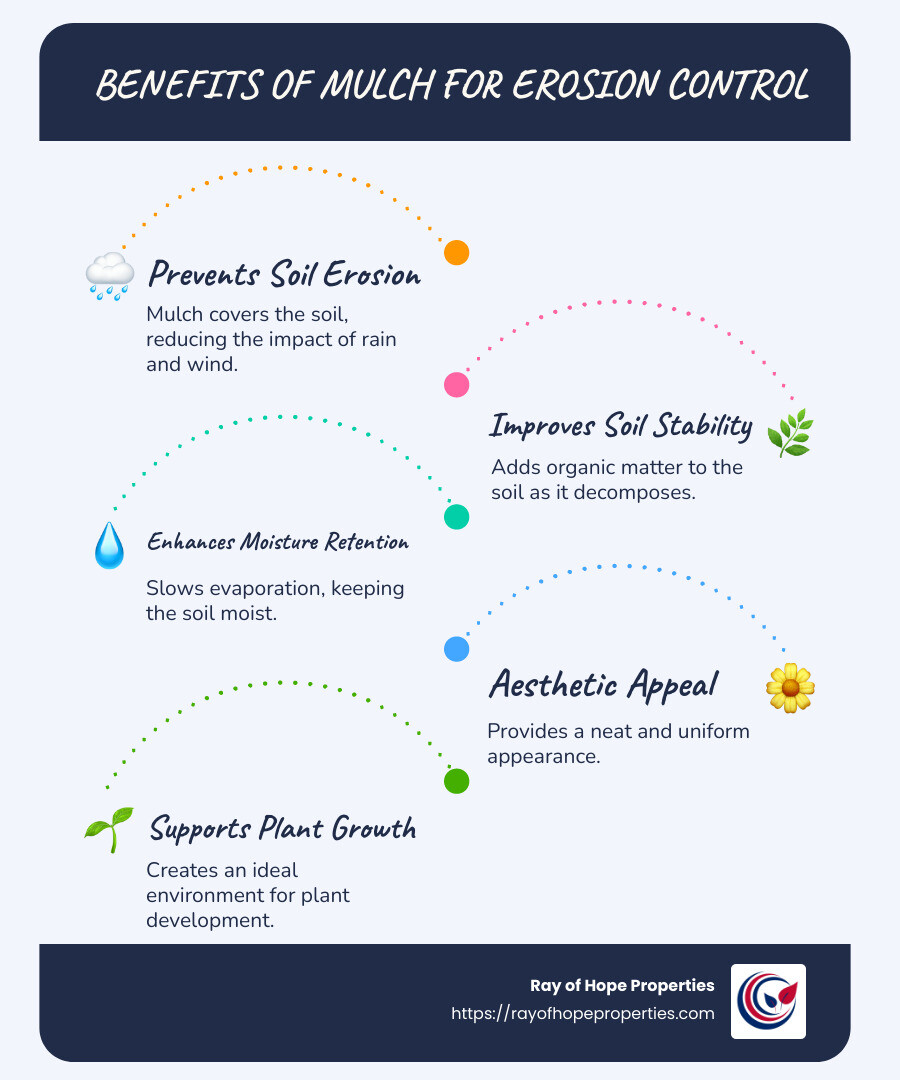
- Prevents soil erosion: Mulch covers the soil, reducing the impact of rain and wind that can wash away topsoil.
- Improves soil stability: Acts as a protective layer, adding organic matter as it decomposes.
- Improves moisture retention: Keeps the soil moist by slowing evaporation, which is crucial in arid regions.
- Aesthetic appeal: Offers a neat and uniform appearance that boosts the visual appeal of any landscape.
Mulching not only guards against erosion but also boosts the health of your soil. Different materials like straw, wood chips, or synthetic options have unique benefits and are chosen based on site needs, such as slope steepness and climate conditions. More often than not, just a layer of mulch can be a game-changer for stabilizing soils and enhancing landscapes.
Understanding Mulch for Erosion Control
Mulch is a simple yet powerful tool for erosion control. It acts as a protective blanket over the soil, helping to reduce erosion and runoff. Let’s explore the various types of mulch and how they contribute to soil protection and runoff reduction.
Types of Mulch
There are several types of mulch available, each with unique characteristics that make them suitable for specific erosion control needs:
Straw Mulch: Straw is lightweight and effective for temporary erosion control. It’s often used on newly planted areas. It needs to be anchored with a tackifier or netting to prevent it from blowing away.
Wood Chips and Bark: These are heavier and provide excellent soil protection. They are ideal for areas with moderate slopes. Wood chips decompose slowly, adding nutrients to the soil over time.
Wood Fiber or Wood Cellulose: This mulch is often applied using a hydroseeder. It works well in combination with seed to stabilize the soil and promote vegetation growth.
Soil Protection
Mulch protects the soil by:
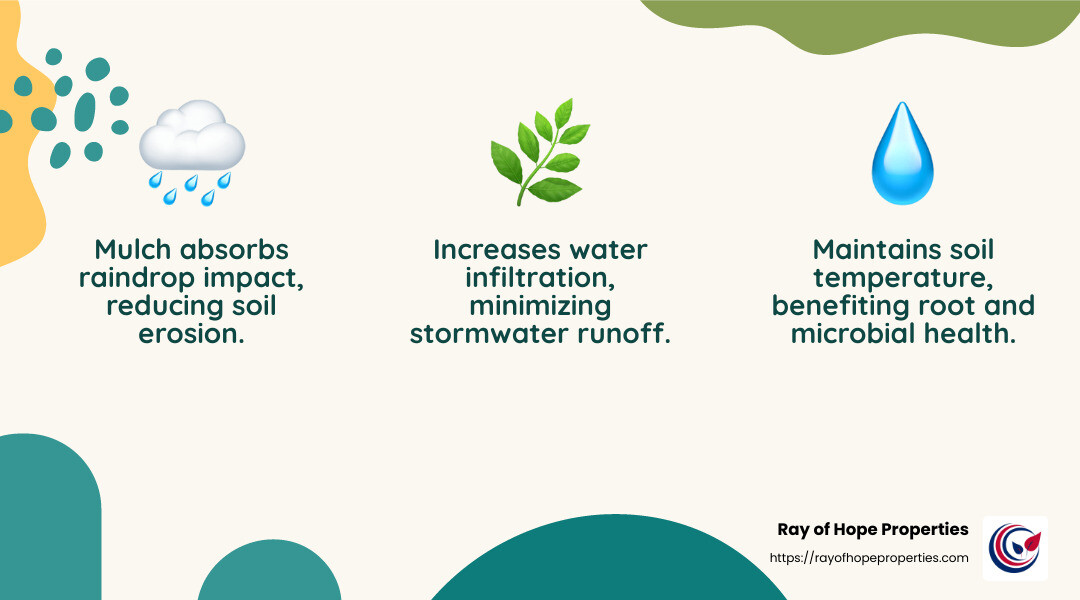
Reducing Raindrop Impact: When rain hits bare soil, it can dislodge soil particles, leading to erosion. Mulch absorbs the impact of raindrops, preventing this from happening.
Insulating the Soil: Mulch helps to maintain a consistent soil temperature, which is beneficial for plant roots and microorganisms that improve soil structure.
Runoff Reduction
Mulch can significantly reduce stormwater runoff by:
Slowing Water Flow: Mulch increases the surface roughness, slowing down water flow and allowing more water to soak into the soil.
Enhancing Infiltration: By keeping the soil surface covered, mulch improves water infiltration, reducing the volume and speed of runoff.
Choosing the right type of mulch for your specific needs is essential. Factors like slope steepness, climate, and the intended duration of erosion control should guide your decision. The effectiveness of mulch in erosion control is maximized when combined with vegetation establishment.
In the next section, we’ll dig into the best mulch types for erosion control, including specific insights on using straw, wood chips, and bark.
Best Mulch Types for Erosion Control
When it comes to mulch for erosion control, not all types are created equal. Let’s dig into some of the best options available and how they can help stabilize your landscape.
Cypress Mulch
Cypress mulch is a popular choice due to its durability and natural resistance to decay. It’s particularly effective for slope stability. The dense nature of cypress mulch means it stays in place even on sloped terrains, reducing soil erosion significantly. Its long-lasting properties make it a great investment for long-term erosion control.
Straw Mulch
Straw mulch is lightweight and versatile, making it ideal for temporary erosion control, especially on newly planted soil. However, straw needs proper anchoring techniques to stay effective. This can be done by applying a tackifier, stapling netting over it, or using a mulch crimping tool. Straw mulch is best used in areas with gentler slopes due to its light weight. When applied correctly, straw mulch can reduce soil loss by up to 98% at a rate of two tons per acre.
Wood Chips and Bark
Wood chips and bark are excellent for areas with moderate slopes. They are heavier than straw, providing robust soil protection. Application methods include using a blower, chop handler, or spreading by hand. It’s important to air dry the chips and add fertilizer to improve soil nutrients over time. Bark, in particular, should be applied at a rate of 35 yards per acre and is best spread using a mulch blower or by hand.
Wood chips are not suitable for fine turf areas but are great for gardens and landscapes needing long-term soil stabilization. They decompose slowly, enriching the soil as they break down.
Choosing the appropriate mulch type depends on your specific erosion control needs and landscape characteristics. Each type offers unique benefits, from slope stability to nutrient enrichment, making them invaluable tools in sustainable landscaping practices.
Benefits of Using Mulch for Erosion Control
Using mulch for erosion control offers several powerful benefits. Let’s explore how mulch can transform your landscape by enhancing soil health and managing water effectively.
Soil Moisture Retention
Mulch acts like a protective blanket over the soil, helping it retain moisture. This is crucial in hot and dry climates where water can evaporate quickly. By keeping the soil moist, plants can thrive even during dry spells. This means less watering and healthier plants.
Weed Competition Reduction
Mulch also plays a key role in reducing weed growth. It blocks sunlight from reaching the soil, which prevents weed seeds from germinating. This reduces the competition for nutrients and water, allowing your desired plants to grow stronger. Imagine a garden where you spend less time weeding and more time enjoying!
Stormwater Management
During heavy rain, mulch helps manage stormwater by absorbing and slowing down runoff. This reduces the risk of erosion and sediment runoff into nearby water bodies. With mulch, water seeps into the ground more effectively, replenishing groundwater supplies and preventing floods.
These benefits make mulch an essential tool for anyone looking to protect their landscape from erosion while promoting a healthy environment for plants. By understanding and utilizing these benefits, you can create a more sustainable and resilient garden space.
How to Apply Mulch Effectively
Want to get the most out of mulch for erosion control? Applying it correctly is key. Let’s explore the best practices for using mulch to protect your landscape.
Application Depth
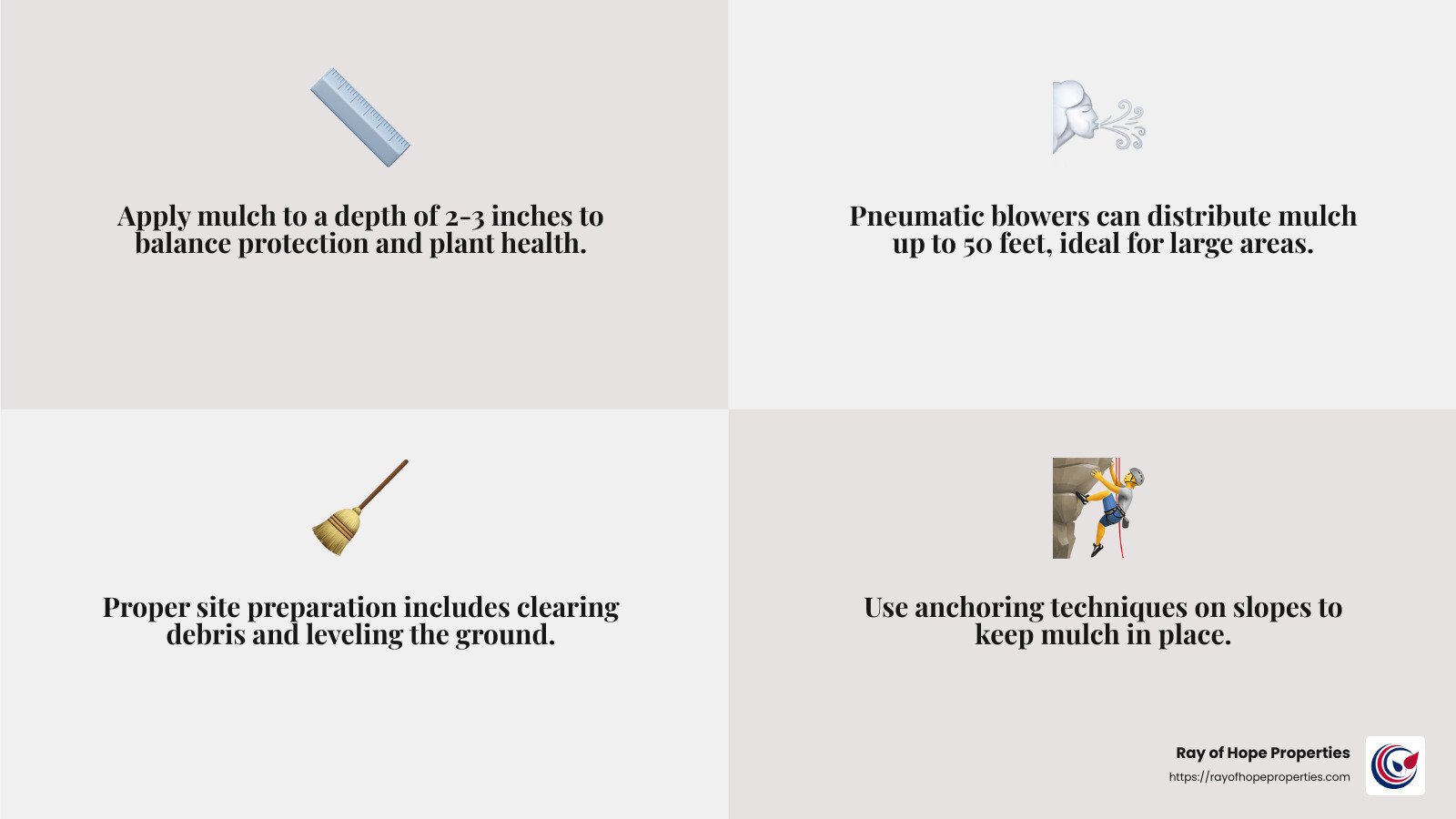
First things first: how deep should you apply mulch? Generally, a depth of 2 to 3 inches is ideal. This thickness helps reduce raindrop splash erosion and suppresses weed growth while still allowing water to reach the soil. Too much mulch can suffocate plant roots, while too little may not provide enough protection. So, aim for that sweet spot to get the best results.
Pneumatic Blowers
Using a pneumatic blower is a game-changer for applying mulch, especially on larger areas or slopes. These machines make it easy to distribute mulch evenly and quickly. They can blow mulch up to 50 feet away, saving you time and effort. For flat areas, bulldozers can also be used to spread mulch efficiently.
Site Preparation
Before applying mulch, it’s crucial to prepare the site properly. Start by clearing away any debris, weeds, or existing vegetation that might interfere with the mulch layer. Next, level the ground as much as possible to ensure even coverage. If you’re dealing with slopes, consider using anchoring techniques like crimping or netting to keep the mulch in place.
By following these steps, you can effectively use mulch to protect your landscape from erosion. Proper application ensures that mulch stays put, supports plant growth, and provides long-lasting benefits.
Frequently Asked Questions about Mulch for Erosion Control
What mulch is best for erosion?
When it comes to choosing the best mulch for erosion control, cypress mulch often stands out. This type of mulch is known for its durability and ability to stabilize slopes effectively. Its dense composition helps to hold soil in place, making it excellent for preventing erosion on uneven terrain. Plus, cypress mulch decomposes slowly, providing long-term protection against soil loss.
Does mulching control soil erosion?
Absolutely! Mulching is a proven method for controlling soil erosion. By covering the soil, mulch reduces the impact of raindrops, which can cause soil to break apart and wash away. This not only helps in runoff reduction but also in soil loss prevention. Mulch acts as a protective barrier, keeping the soil intact and reducing the speed and volume of water runoff.
What type of mulch is best for slopes?
For slopes, you want a mulch that stays put. Coarse mulch like wood chips or tree bark is ideal because it grips the soil well, preventing it from washing away. Straw is another good option, especially when anchored properly. Techniques such as crimping or using netting can help keep straw mulch in place, even on steep slopes. By choosing the right mulch and securing it correctly, you can effectively protect slopes from erosion.
Conclusion
At Ray of Hope Properties, we believe in the power of eco-friendly solutions to improve landscapes while protecting our environment. Our team in Tuscaloosa, AL, specializes in using sustainable practices like mulch for erosion control to preserve soil integrity and boost the beauty of residential and commercial properties.
Mulching is not just about aesthetics; it’s a crucial tool in landscaping services for soil stabilization and erosion prevention. By choosing the right type of mulch and applying it effectively, we help reduce soil loss, manage stormwater, and retain soil moisture. These benefits not only improve the health of your garden but also contribute to a more sustainable environment.
Our personalized approach ensures that each landscape is treated with care, using the best practices custom to its unique needs. Whether you’re looking to stabilize a slope with cypress mulch or protect a garden bed with wood chips, our team is here to help. We take pride in offering solutions that are both eco-friendly and effective.
Explore how our landscaping services can transform your outdoor space into a sustainable and beautiful environment. Learn more about our mulching services in Tuscaloosa, AL, here.
By choosing Ray of Hope Properties, you’re not just investing in your property; you’re investing in a healthier planet. Let us help you stop erosion in its tracks with our expert mulching services!


