

Low maintenance raised beds offer the perfect solution for individuals like John M. in Tuscaloosa looking to enjoy the benefits of gardening without spending countless hours on upkeep. These liftd garden beds are designed to make gardening simpler, more efficient, and accessible to everyone.
- Time-Saving: Raised beds require less weeding and allow better water management.
- Space Efficiency: They maximize your growing area by organizing plants neatly.
- Versatile Design: Suitable for any landscaping need and can be customized easily.
- Healthier Plants: With controlled soil conditions, plants thrive better.
Imagine changing your outdoor space into a lush oasis while keeping maintenance to a minimum. Raised beds provide a myriad of advantages, from improved soil quality to increased independence from rocky or compacted ground. They help create a picture-perfect garden efficiently, whether you’re a seasoned gardener or just starting.
These beds aren’t just practical; they’re crucial for thriving ecosystems. With the right materials and strategic placement, they can make any outdoor area a haven of beauty and sustainability.
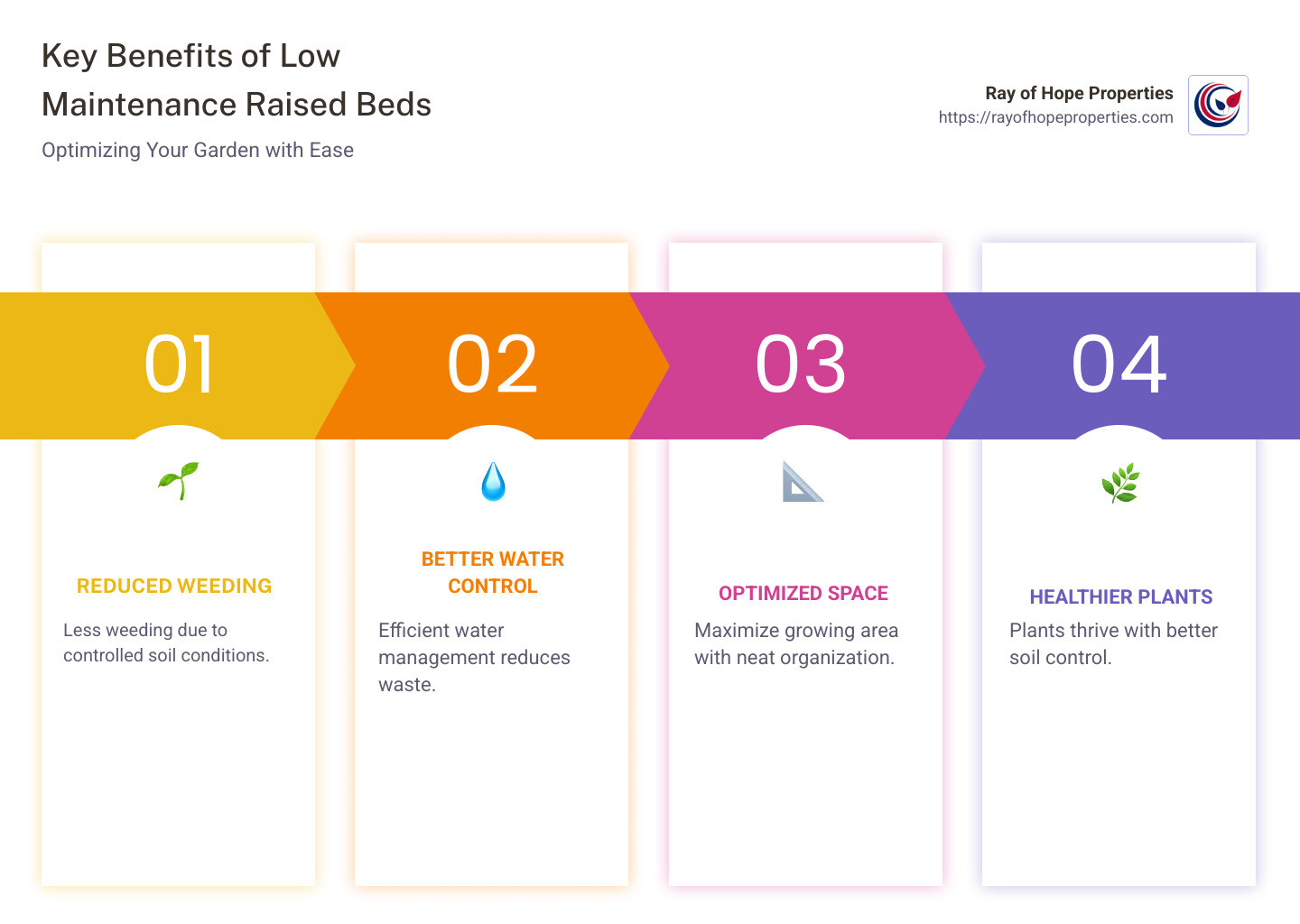
Benefits of Low Maintenance Raised Beds
Raised beds are a game-changer for anyone looking to garden with ease. Here’s why they’re so beneficial, especially when you want to keep things low maintenance.
Soil Control
Control Your Soil Quality: One of the biggest advantages of raised beds is the ability to control the soil environment. Unlike traditional in-ground gardens, you can fill your raised beds with the perfect soil mix, ensuring your plants get the nutrients they need. You can use a mix of compost, potting soil, and natural amendments to create a fertile growing medium. This control over soil quality means fewer issues with poor native soil, which often lacks the nutrients that plants need to thrive.
Weed Reduction
Say Goodbye to Weeds: Raised beds significantly reduce weed pressure. Since you’re starting with a fresh soil mix, you’re not inheriting weed seeds from the ground. Plus, the elevation makes it harder for weeds to invade from surrounding areas. Some gardeners report only needing to weed once about six weeks after planting. This translates to less time spent battling unwanted plants and more time enjoying your garden.
Ease of Access
Gardening Made Easy: Raised beds make gardening more accessible and comfortable. They’re especially beneficial for those with back pain or mobility issues. With beds raised to a comfortable height, you can tend to your plants without excessive bending or kneeling. This ease of access encourages more frequent and enjoyable gardening sessions.
Less Strain, More Gain: With raised beds, you spend less time and effort on maintenance. They offer a simple way to keep your garden organized and efficient. Whether you’re a seasoned gardener or a beginner, raised beds make it easier to cultivate a healthy, productive garden.
By incorporating low maintenance raised beds into your garden design, you’ll enjoy the benefits of healthier plants, reduced maintenance, and a more enjoyable gardening experience. These beds are not just a practical choice; they’re an investment in creating a sustainable and beautiful outdoor space.
Materials for Building Raised Beds
Choosing the right materials for your raised beds is key to achieving a low maintenance gardening experience. Let’s explore some cost-effective and sustainable options: wood, natural materials, and upcycled items.
Wood Options
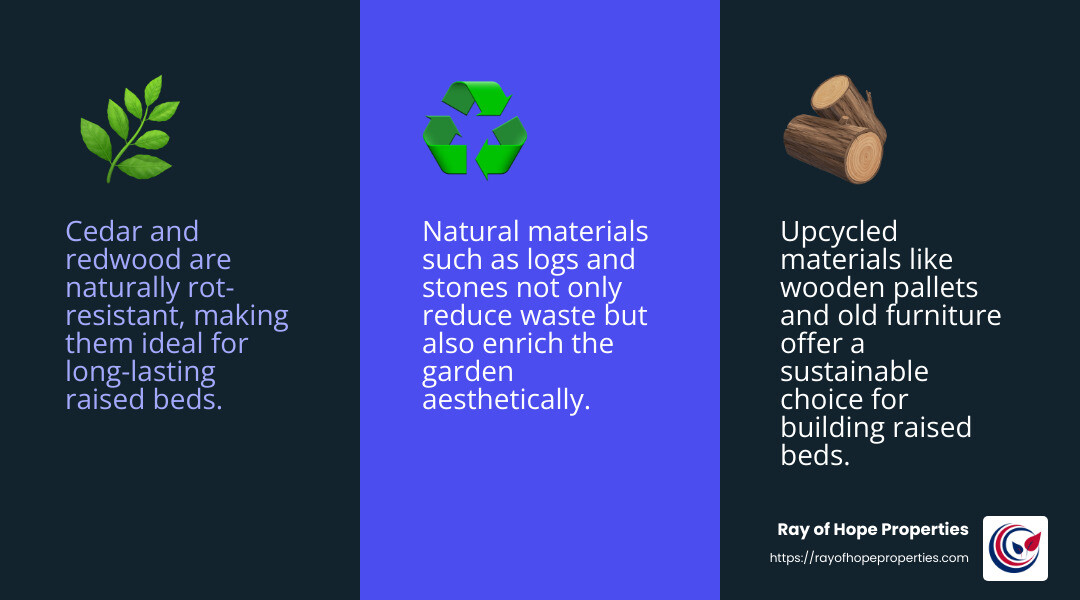
Cedar and Redwood: These are popular choices for raised beds due to their natural resistance to rot. They can last for many years without needing chemical treatments. While they might be more expensive initially, their durability makes them a worthwhile investment.
Pine and Fir: If you’re on a budget, pine and fir are more affordable options. However, they may require some treatment to extend their lifespan. Weatherproofing these woods can help them withstand the elements better.
Avoid Pressure-Treated Wood: While tempting due to its low cost and resistance to rot, pressure-treated wood often contains chemicals that can leach into the soil. This is especially concerning when growing edibles, so it’s best to avoid it.
Natural Materials
Logs and Stones: If you have access to fallen logs or stones, these can be used to create a natural-looking raised bed. Logs will decompose over time, enriching the soil with organic matter. Stones, on the other hand, offer a more permanent solution and can add a rustic charm to your garden.
Bricks and Pavers: These materials are not only durable but can often be sourced from leftover construction projects. They provide a sturdy structure and can be arranged in creative patterns to improve garden aesthetics.
Upcycled Items
Wooden Pallets: Often available for free or at a low cost, pallets can be dismantled and repurposed to build raised beds. Ensure they are heat-treated (marked with “HT”) to avoid chemical contamination.
Old Furniture: An old bookcase or table can be transformed into a raised bed with a little creativity. Ensure adequate drainage by drilling holes at the bottom.
Galvanized Tubs and Stock Tanks: These make excellent raised beds and often come with built-in drainage. Their industrial look can add a unique touch to your garden design.
Concrete Blocks: Affordable and easy to stack, concrete blocks can be used to build raised beds of various shapes and sizes. They are durable and can be filled with soil to plant small herbs or flowers.
By using these materials, you can create a low maintenance raised bed that suits your budget and style, while contributing to a sustainable gardening practice. These options not only save money but also promote eco-friendly practices by reducing waste and reusing materials.
Low Maintenance Raised Beds: Design and Construction Tips
Designing your low maintenance raised beds involves careful consideration of three key elements: bed height, bed width, and the space between beds. Let’s explore these essential tips to help you plan a garden that’s easy to manage and productive.
Bed Height
The height of your raised bed can make a big difference in how much effort you’ll need to put into maintaining it.
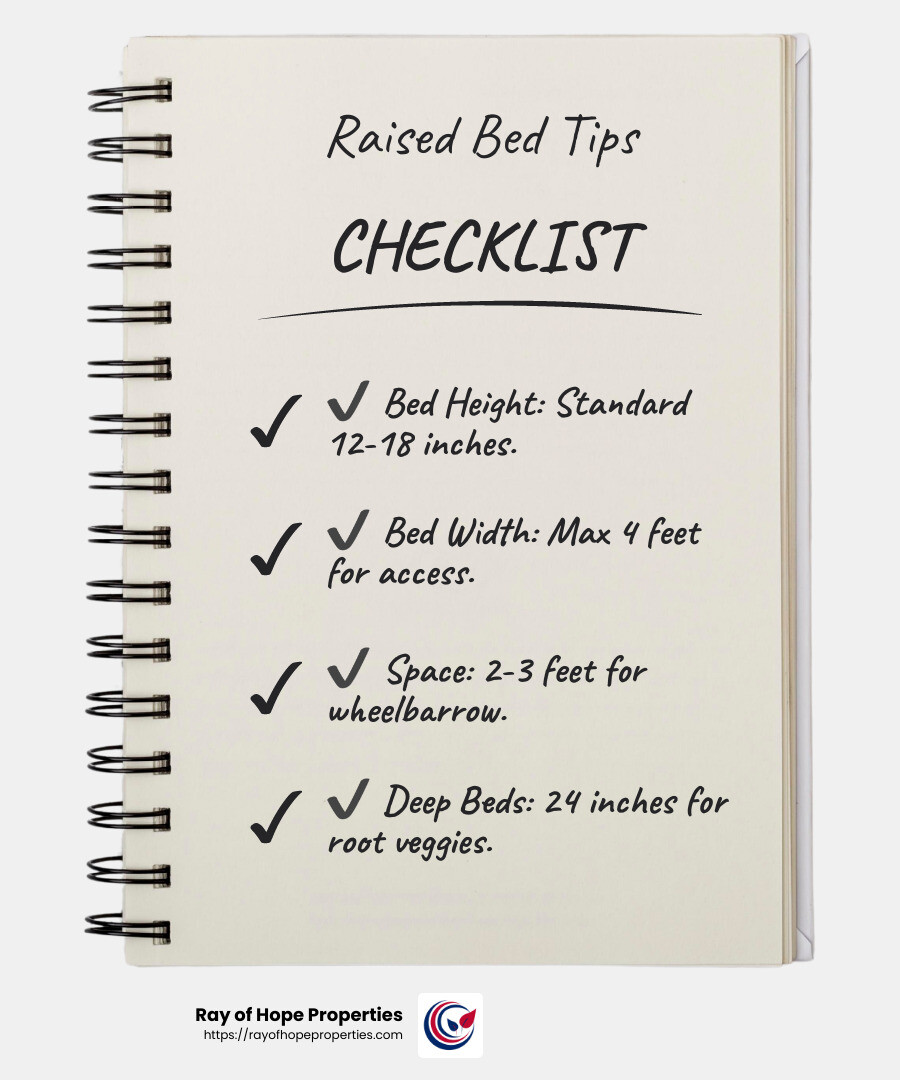
- Standard Height: A typical raised bed is about 12 to 18 inches tall. This is a great height for most vegetables and allows for proper root growth without excessive soil compaction.
- Higher Beds: If bending is a concern, consider building your beds up to 24 inches high. This height is more accessible and can be a relief for your back and knees.
- Deep Beds: For root vegetables like carrots and potatoes, you might want a deeper bed, around 24 inches, to give them plenty of room to grow.
Bed Width
Choosing the right width for your raised beds is crucial for accessibility and soil health.
- Against a Wall or Fence: If your bed is next to a wall, keep it no more than 2.5 feet wide. This width allows you to reach all parts of the bed without stepping into it, which helps prevent soil compaction.
- Open Space Beds: For beds that are accessible from both sides, a width of up to 4 feet is ideal. This allows you to reach the center of the bed from either side easily.
- Personal Preference: Some gardeners find a 3-foot width to be the most comfortable. It really depends on your reach and how you plan to use the space.
Space Between Beds
The space between your raised beds is just as important as the beds themselves.
- Wheelbarrow Access: Ensure there’s enough room between beds to comfortably steer with tools or a wheelbarrow. A gap of at least 2 to 3 feet is usually sufficient.
- Avoid Wasted Space: While it’s important to have enough room to work, avoid placing beds too far apart to prevent wasted space. This will also save you time and effort when mulching or mowing.
By focusing on these design and construction tips, you can create low maintenance raised beds that are not only functional but also easy to care for. Proper planning will ensure your gardening efforts yield a bountiful harvest with minimal hassle.
Filling and Maintaining Your Raised Beds
Once your low maintenance raised beds are built, the next step is filling them with the right materials and ensuring they stay healthy and productive. Let’s explore the essential components: soil options, composting, and irrigation.
Soil Options
Choosing the right soil is crucial for the success of your raised beds. Here are some options to consider:
Topsoil and Compost Mix: A common choice is a blend of topsoil and compost. This mix provides a nutrient-rich environment for your plants. Aim for a ratio of about 60% topsoil to 40% compost.
Pre-Mixed Garden Soil: For convenience, you can purchase pre-mixed garden soil specifically designed for raised beds. These mixes often include a balanced blend of soil, compost, and other organic materials.
Layering Method: Some gardeners prefer the “lasagna” method, layering organic materials like cardboard, straw, and leaves, topped with soil. This method enriches the soil as the layers decompose.
Composting
Composting is a natural way to enrich your soil and reduce waste. Here’s how to incorporate it into your raised beds:
Add Compost Regularly: Top your beds with a 2-3 inch layer of compost in the spring. This replenishes nutrients and improves soil structure.
Use Kitchen Scraps and Yard Waste: Composting kitchen scraps like vegetable peels and coffee grounds, along with yard waste, can create a sustainable nutrient cycle for your garden.
Compost Tea: Consider using compost tea, a nutrient-rich liquid made by steeping compost in water. It can be used to water your plants, providing an extra boost of nutrients.
Irrigation
Proper irrigation is key to maintaining healthy raised beds without much fuss. Here are some tips:
Soaker Hoses: Lay soaker hoses on the soil surface before planting. They provide slow, deep watering, which is more efficient than overhead sprinklers.
Electronic Timers: Attach a timer to your watering system to automate watering schedules. Set it to water every 4-5 days for about 4 hours, depending on your climate.
Adjust for Seasons: Monitor your plants and adjust watering frequency based on the season. Less water is needed in spring and fall, while summer may require more frequent watering.
By carefully selecting soil, incorporating compost, and setting up an efficient irrigation system, you can ensure your low maintenance raised beds remain productive and easy to care for. With these strategies, your garden will thrive with minimal effort, allowing you to enjoy the fruits of your labor without constant upkeep.
Frequently Asked Questions about Low Maintenance Raised Beds
What should you not put in a raised bed?
When setting up your low maintenance raised beds, it’s important to avoid certain items that can harm your plants or the environment. Junk items and trash should never be used as filler. These can introduce toxins or take up space without providing any benefit to your garden. Instead, focus on using organic materials that will decompose and enrich your soil.
Is it cheaper to buy or build raised garden beds?
Deciding whether to buy or build your raised beds depends on several factors, including wood cost and personal preference. Building your own can be cost-effective, especially if you use upcycled materials like old bricks or logs. However, purchasing pre-made kits might save time and effort. DIY vs. purchase is ultimately a choice between saving money and saving time. If you have access to affordable or free materials, building can be a great option. But if convenience is a priority, buying might be worth the investment.
What are the disadvantages of raised beds?
While low maintenance raised beds offer many benefits, they do have some drawbacks. One issue is the potential for the soil to dry out more quickly than ground-level gardens. This is because raised beds have more exposed surfaces. Regular watering and good mulch coverage can help mitigate this.
Another consideration is the initial effort required to set up raised beds. Building or assembling the beds, filling them with soil, and installing irrigation systems require upfront work. However, once established, raised beds often require less maintenance than traditional gardens, making the initial effort worthwhile for many gardeners.
By understanding what to avoid and weighing the pros and cons, you can make informed decisions that best suit your gardening needs.
Conclusion
At Ray of Hope Properties, we believe that gardening should be a joy, not a chore. That’s why we focus on creating low maintenance raised beds that are both beautiful and functional. Our approach is rooted in sustainable practices that not only improve the aesthetics of your outdoor space but also promote a healthy environment.
By choosing personalized solutions custom to your specific needs, we ensure that your garden beds are not just an addition to your yard, but a reflection of your lifestyle. Our team in Tuscaloosa, AL, works closely with you to design and construct raised beds that fit seamlessly into your landscape, using eco-friendly materials whenever possible.
Raised beds offer numerous benefits, from improved soil control to reduced weed growth, making them a smart choice for both novice and experienced gardeners. With our expertise, we help you steer the choices between materials, designs, and maintenance strategies to create a garden that flourishes with minimal effort.
Our commitment to sustainability means we prioritize native plants and organic practices, ensuring your garden contributes positively to the local ecosystem. Whether you’re looking to grow vegetables, flowers, or both, our customized plant and garden bed solutions are designed to provide a lush, productive outdoor space that you can enjoy year-round.
For more information on how we can transform your yard with our professional garden bed installation services, visit our plant and garden bed construction page.
Let us help you create a garden that not only looks good but does good for the environment.


