
Landscaping with native plants is gaining popularity as an eco-friendly and sustainable gardening solution. Native plants offer significant advantages for creating a beautiful, low-maintenance garden that thrives in the local climate. For homeowners and business owners alike, these gardens can be both practical and visually pleasing.
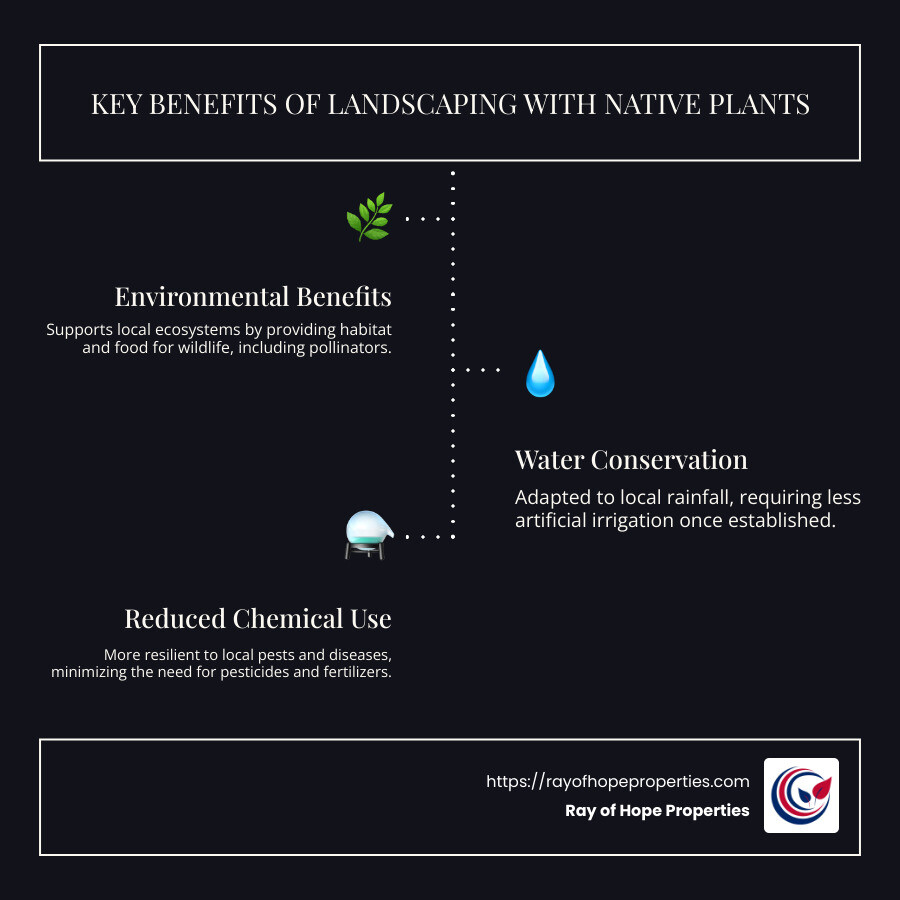
Key Benefits of Landscaping with Native Plants:
- Environmental Benefits: Native plants support local ecosystems by providing habitat and food for wildlife, including pollinators and beneficial insects.
- Water Conservation: These plants are adapted to local rainfall patterns, requiring less artificial irrigation once established.
- Reduced Chemical Use: Native plants are more resilient to local pests and diseases, minimizing the need for harmful pesticides and fertilizers.
Investing in a native plant garden means you’re aligning with nature’s rhythms. It’s about reducing resource consumption and embracing eco-friendly methods that honor the natural world. By choosing plants that naturally fit the local environment, you’re not just enhancing aesthetics but also participating in a larger movement toward sustainability.
Ray of Hope Properties believes that landscaping should contribute positively to both the environment and the community. Embracing native plants allows us to create spaces that are not only attractive but also resilient and supportive of local biodiversity.
Quick Landscaping with native plants terms:
– Functional garden design
– Low maintenance garden ideas
Benefits of Landscaping with Native Plants
When it comes to creating a garden that’s both beautiful and sustainable, landscaping with native plants is the way to go. These plants are not just a pretty addition to your garden; they bring a host of benefits that make them a smart choice for any landscape.
Environmental Benefits
Native plants play a crucial role in supporting local ecosystems. By providing food and shelter, they attract pollinators like bees and butterflies, as well as other beneficial insects. This helps maintain a balanced ecosystem right in your backyard. A garden filled with native plants becomes a haven for wildlife, enhancing biodiversity and supporting the natural balance of your area.
Water Conservation
One of the standout benefits of using native plants is their ability to conserve water. Because they are adapted to the local climate, they require less irrigation compared to non-native species. This means you can enjoy a lush, green garden without the need for excessive watering. In places like Tuscaloosa, AL, where water conservation is important, choosing native plants can significantly reduce water usage.
Reduced Chemical Use
Native plants are naturally more resistant to local pests and diseases. This resilience reduces the need for chemical pesticides and fertilizers, which can harm the environment. By minimizing chemical use, you’re not only keeping your garden healthier but also protecting the surrounding areas from potential pollutants. This aligns with sustainable practices that prioritize the health of the ecosystem.
Incorporating native plants into your landscape is a step toward creating a garden that thrives naturally. It’s about working with nature rather than against it. When you choose native plants, you’re investing in a garden that’s not only beautiful but also sustainable and eco-friendly. This approach benefits the environment, conserves precious resources, and supports the local community.
Ray of Hope Properties is dedicated to helping you create a garden that is both stunning and sustainable. With native plants, you can enjoy a landscape that is in harmony with the local environment, offering beauty and functionality year-round.
Designing Your Native Plant Garden
Designing a native plant garden is like crafting a masterpiece that blends beauty with sustainability. Let’s break down each step to help you create a landscape that thrives naturally.
Site Analysis
Before you start planting, take a good look at your garden space. Understanding your garden’s unique characteristics is crucial.
- Soil Type: Is your soil sandy, clay, or loamy? Different plants thrive in different soil types. For example, the Douglas Fir mentioned in an urban garden case study thrived thanks to its adaptation to local soil conditions.
- Sunlight Exposure: How much sunlight does each part of your garden receive? Some plants love the sun, while others prefer the shade.
- Water Flow: Observe how water moves through your yard. Are there areas where water tends to pool, or spots that stay dry? This will guide your plant selection.
By answering these questions, you’ll be better equipped to choose plants that will flourish in your garden.
Plant Selection
Choosing the right plants is the heart of your native plant garden. Start with a few reliable performers that you know will grow well in your area.
- Foundation Plants: Begin with one or two native plants that are known to thrive in your conditions. Once established, these will serve as the backbone of your garden.
- Diverse Palette: Incorporate a mix of grasses, perennials, and shrubs. This diversity not only improves visual appeal but also supports a variety of wildlife. For instance, the Vine Maple and Mock Orange are excellent choices for attracting pollinators.
- Staggered Blooms: Select plants with different bloom times to ensure continuous color throughout the seasons. A spring bloomer like Red Columbine can be paired with a summer bloomer such as Fireweed.
Garden Layout
Now that you have your plants, it’s time to arrange them thoughtfully.
- Grouping and Layering: Group plants with similar needs together. Layer them by height to create depth and interest. Taller plants like Douglas Fir can serve as a backdrop, while shorter plants like Salal fill in the foreground.
- Visual Flow: Consider how the eye moves through your garden. Use curves and natural shapes to guide the viewer’s gaze.
- Functional Borders: Define your garden areas with natural borders like stones or mulch. This not only adds structure but also makes maintenance easier.
By following these steps, you can design a native plant garden that is both functional and beautiful. It’s about creating a space that feels like a natural extension of the local environment.
With careful planning and thoughtful design, your garden will be a thriving ecosystem that brings joy and sustainability to your home.
How to Maintain a Native Plant Landscape
Maintaining a native plant landscape can be straightforward with a little planning and consistent care. Let’s explore how to keep your garden thriving with minimal effort.
Site Preparation
Before planting, it’s important to prepare your site well. This step ensures that your native plants have the best start possible.
- Weed Eradication: Remove perennial weeds like bindweed and Bermuda grass. If not removed, these aggressive plants can take over your garden.

- Define Borders: Use materials like metal edging or stone to create clear boundaries. This not only provides a neat appearance but also helps in maintaining your garden by preventing grass and weeds from creeping in.
Maintenance Practices
Once your native plants are in the ground, ongoing maintenance is key. Fortunately, native plants typically require less care than non-native species.
- Watering: Native plants are adapted to local climate conditions and usually need less water. However, during the establishment phase, they may require regular watering until their roots are well-developed.
- Pruning and Deadheading: Trim plants to encourage healthy growth and remove spent flowers to promote further blooming. This practice also helps in maintaining the garden’s appearance.
- Soil Health: Use organic mulches to retain moisture and improve soil quality. Mulching also helps suppress weeds and maintain a consistent soil temperature.
Weed Control
Weeds can be a persistent challenge in any garden, but with native plants, the battle is easier.
- Mulching: A thick layer of mulch can prevent sunlight from reaching weed seeds, reducing their chances of germination.
- Manual Removal: Regularly check for weeds and remove them by hand. This is most effective when weeds are small and haven’t yet established deep roots.
- Natural Barriers: Use ground covers or densely planted areas to naturally suppress weeds. Native ground covers like Wild Ginger can create a lush, weed-resistant carpet.
By following these maintenance strategies, your native plant landscape will not only look beautiful but also support local wildlife and reduce environmental impact. With the right care, your garden can become a self-sustaining ecosystem that requires less intervention over time.
Next, we’ll address some common challenges you might face and how to overcome them.
Common Challenges and Solutions
When landscaping with native plants, you might encounter a few problems. Let’s discuss some common challenges and practical solutions to ensure your garden thrives.
Pest Attraction
Native plants can sometimes attract pests, which is a natural part of any ecosystem. However, there are ways to manage this effectively.
- Natural Predators: Encourage beneficial insects like ladybugs and lacewings, which can keep pest populations in check. Planting a diversity of native plants can attract these helpful allies.
- Companion Planting: Use certain plants to repel pests. For example, planting marigolds can deter aphids.
- Regular Monitoring: Keep an eye on your plants for signs of pest damage. Early detection allows for quick intervention, reducing the need for chemical treatments.
Mismatched Planting
Not all native plants will thrive in every part of your garden. It’s crucial to match plants to the right conditions.
- Site Analysis: Understand the specific needs of each plant—sunlight, soil type, and moisture levels. Group plants with similar requirements together.
- Trial and Error: Start with a small number of plants and observe their performance. Adjust plant placements based on their growth and health.
- Expert Advice: Consult local native plant societies or professionals like Ray of Hope Properties for guidance on plant selection and placement.
Plant Competition
Native plants can sometimes compete with each other for resources, which may hinder their growth.
- Spacing: Ensure adequate space between plants to allow for growth and prevent overcrowding. This helps reduce competition for sunlight, water, and nutrients.
- Layering: Use a layered approach in your garden design, with taller plants providing shade and protection for smaller, shade-loving species.
- Regular Maintenance: Prune and thin plants as necessary to maintain healthy growth and reduce competition.
By addressing these challenges with thoughtful planning and care, your native plant landscape can flourish. You’ll enjoy a garden that’s not only beautiful but also resilient and supportive of local ecosystems.
Next, we’ll answer some frequently asked questions about native plant landscaping.
Frequently Asked Questions about Native Plant Landscaping
Why should native plants be used in landscaping?
Environmental Benefits: Native plants are a powerhouse for the environment. They provide essential habitats for local wildlife, including birds, butterflies, and bees. These plants are adapted to the local climate and soil conditions, which means they require less water and fewer chemicals. This not only conserves precious resources but also reduces pollution from fertilizers and pesticides.
Reduced Maintenance: Because native plants are accustomed to the local environment, they need less care. This means less mowing, watering, and fertilizing. Once established, they thrive with minimal intervention, making them a perfect choice for those seeking a low-maintenance garden.
What are the disadvantages of planting native plants?
Pest Attraction: While native plants support local ecosystems, they can sometimes attract pests. However, this is a natural part of having a balanced garden. Encouraging natural predators and using companion planting can help manage these pests without resorting to chemicals.
Neighbor Concerns: Some neighbors might worry about a garden filled with native plants looking “wild” or unkempt. To address this, consider incorporating clear borders or paths to give the garden a more structured appearance. This can make your native plant landscape look intentional and well-maintained.
How do you arrange native plants?
Design Fundamentals: Start with a clear plan. Analyze your garden’s conditions, like sunlight and soil type, to determine which plants will thrive. Use a mix of heights, colors, and textures to create visual interest throughout the year. Consider the blooming times of your plants to ensure there’s always something in bloom.
Plant Grouping: Group plants with similar needs together. This makes it easier to care for them and ensures they thrive. For example, place sun-loving plants in the sunniest spots and shade-tolerant plants in shadier areas.
Use a layered approach: Taller plants can provide shade and protection for smaller species. This not only creates a dynamic landscape but also mimics natural ecosystems.
By thoughtfully arranging native plants, you can create a garden that is both beautiful and sustainable. This approach not only supports local wildlife but also requires less maintenance, giving you more time to enjoy your outdoor space.
Next, we’ll conclude with how Ray of Hope Properties can help you create your personalized, sustainable garden.
Conclusion
At Ray of Hope Properties, we believe that landscaping with native plants is more than just a trend—it’s a way to create sustainable, beautiful gardens that benefit both the environment and the community. Our expertise in personalized landscaping ensures that each project reflects the unique needs and desires of our clients in Tuscaloosa, AL.
Sustainable Gardens: Native plants are the foundation of a resilient landscape. They are adapted to the local climate, which means they thrive with less water and minimal maintenance. This not only conserves resources but also reduces the need for harmful chemicals. By choosing native plants, you are investing in a garden that supports local wildlife and improves biodiversity.
Personalized Landscaping: We tailor our services to fit your vision and lifestyle. Whether you want a vibrant garden filled with colorful blooms or a serene space with lush greenery, our team works closely with you to design a landscape that meets your goals. We consider every detail, from plant selection to garden layout, ensuring that your outdoor space is both functional and stunning.
Our commitment to eco-friendly solutions means we use sustainable practices in every aspect of our work. From using organic fertilizers to implementing efficient irrigation systems, we strive to create landscapes that are not only beautiful but also environmentally responsible.
Ready to transform your yard into a sustainable paradise? Let us help you create a garden that you can be proud of. Learn more about our services and how we can bring your vision to life by visiting our services page. Together, we can make a positive impact on the environment while enhancing the beauty of your home.


