

Why Good Soil for Your Garden Beds is Crucial
Good soil for garden beds is the foundation of a thriving garden and is essential for plant growth, ensuring a balanced supply of nutrients. Without the right type of soil, plants struggle to anchor themselves, absorb water, and take in essential nutrients. Here’s what makes soil so important:
- Supports Plant Growth: Soil provides the necessary structure that plants need for root development. A healthy root system ensures that plants can grow strong and tall.
- Nutrient Supply: Good soil acts like a pantry, storing nutrients that plants need to thrive. It delivers these nutrients directly to the plants through their root systems.
- Balances pH Levels: The right soil maintains a neutral pH balance, which is crucial for nutrient uptake. Too acidic or too alkaline, and plants can’t absorb what they need.
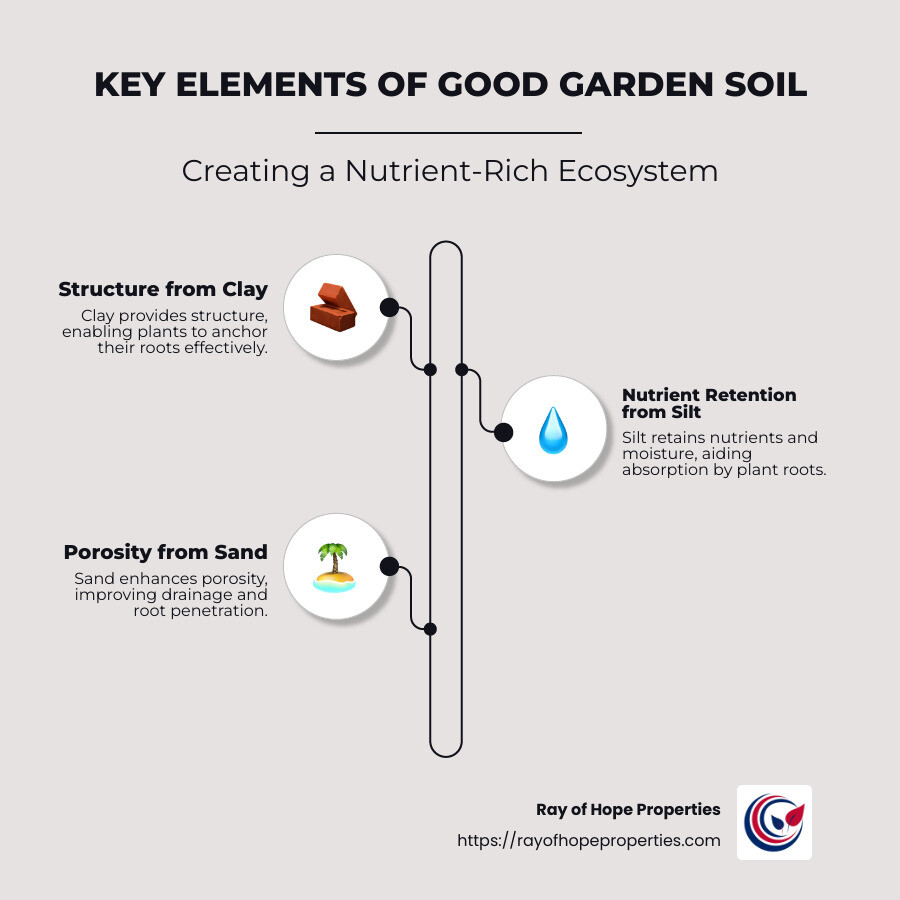
When you’re aiming for lush, vibrant garden beds, the secret lies beneath the surface. To explore how to achieve this optimal soil condition, consider the components such as clay for structure, silt for nutrient retention, sand for porosity, and organic matter for added health benefits. Each component plays a critical role in creating a nutrient-rich ecosystem right in your backyard.
Similar topics to good soil for garden beds:
Understanding Soil Composition
When it comes to crafting good soil for garden beds, understanding the composition of your soil is key. Let’s break down the essential components: loamy soil, sand, silt, clay, and organic matter.
Loamy Soil
Loamy soil is often considered the gold standard for gardening. It’s a balanced mix of sand, silt, and clay, with a good dose of organic matter. This combination offers excellent drainage, nutrient retention, and structure—making it ideal for most plants.
- Drainage: Loamy soil drains well, preventing water from pooling around plant roots.
- Nutrient Retention: It holds onto nutrients effectively, supplying them steadily to plants.
- Structure: The balanced texture allows roots to anchor firmly and spread easily.
Sand
Sand is known for its large particles and gritty texture. While it’s not high in nutrients, it plays a vital role in improving soil drainage and aeration.
- Porosity: Sand creates spaces between particles, allowing air and water to flow freely.
- Permeability: This helps prevent waterlogging, which can drown plant roots.
Silt
Silt has a silky feel and is packed with nutrients. It holds onto moisture better than sand but drains more effectively than clay.
- Nutrient-Rich: Filled with vitamins and minerals, silt is like nature’s multivitamin for plants.
- Moisture Retention: It helps keep the soil moist without becoming waterlogged.
Clay
Clay is dense and sticky, with very fine particles. While it can be tough to work with, it provides essential structure to the soil.
- Structure: Clay holds roots firmly, giving plants stability as they grow.
- Nutrient Storage: It can store nutrients well, but its density can limit drainage.
Organic Matter
Organic matter includes decomposed plant and animal material, often referred to as compost. It’s crucial for soil health.
- Nutrient Boost: As organic matter breaks down, it releases nutrients that plants need.
- Soil Health: It improves soil structure, increases water retention, and supports beneficial microorganisms.

By combining these elements in the right proportions, you can create a thriving environment for your garden beds. This mix supports plant roots, ensures proper drainage, and supplies a steady flow of nutrients. Next, let’s explore the best soil mixes for garden beds to achieve this balance.
Best Soil Mixes for Garden Beds
Crafting the perfect soil mix is crucial for a thriving garden. Here, we explore three popular soil mixes that have proven effective in various gardening scenarios: Triple Mix, Mel’s Mix, and the Perfect Soil Recipe.
Triple Mix
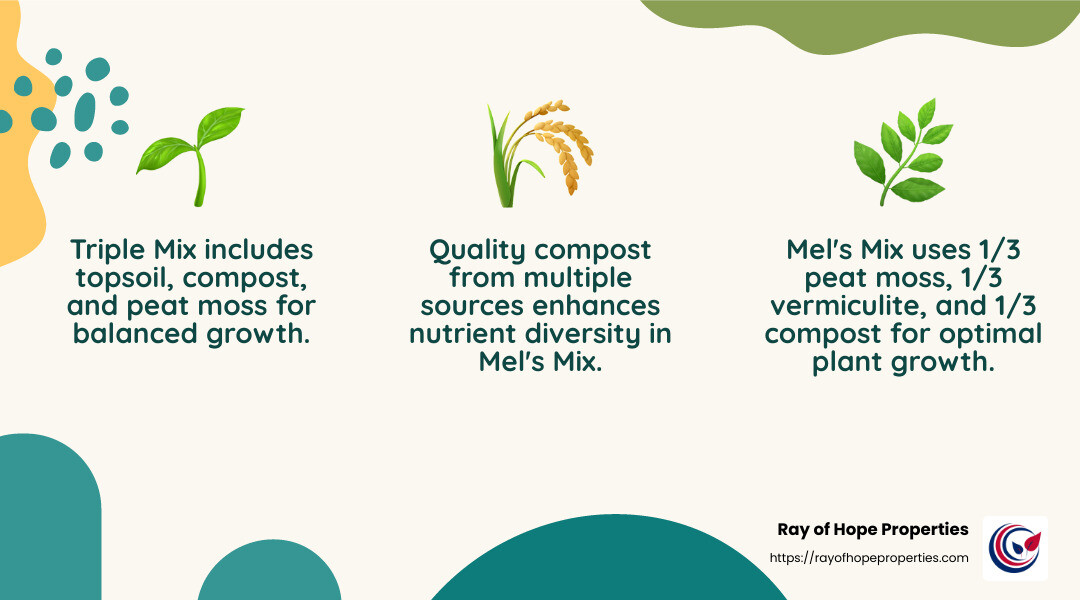
Triple Mix is a well-loved choice among gardeners for its simplicity and effectiveness. This mix typically consists of:
- Topsoil: Provides structure and essential nutrients.
- Compost: Boosts nutrient content and improves soil health.
- Peat Moss: Improves moisture retention and soil aeration.
The beauty of Triple Mix lies in its balanced composition, making it ideal for a wide range of plants. It ensures good drainage while retaining enough moisture for root uptake. This combination is particularly beneficial for vegetable gardens, where nutrient-rich soil is a must.
Mel’s Mix
Inspired by Mel Bartholomew’s Square Foot Gardening, Mel’s Mix is designed for optimal plant growth in raised beds. It includes:
- 1/3 Peat Moss: Offers excellent moisture retention.
- 1/3 Vermiculite: Improves aeration and drainage.
- 1/3 Compost: Supplies a diverse range of nutrients.
The key to Mel’s Mix is the quality of the compost. Using compost from multiple sources, such as worm castings and chicken manure, improves nutrient diversity. This mix is known for its light, fluffy texture, making it easy to work with and highly effective in supporting healthy plant growth.
Perfect Soil Recipe
Recommended by gardening expert Joe Lamp’l, the Perfect Soil Recipe is a versatile option for those looking to customize their soil mix. It consists of:
- 50% Topsoil: Provides a stable base rich in nutrients.
- 30% Compost: Improves fertility and soil structure.
- 20% Other Organic Matter: Adds variety and boosts microbial activity.
This mix is adaptable, allowing gardeners to include organic materials like homemade compost or worm castings based on availability. While it may require some tweaking to suit specific conditions, its flexibility makes it a favorite among experienced gardeners.
Each of these soil mixes offers unique benefits, catering to different gardening needs and preferences. Whether you’re aiming for easy maintenance or nutrient-rich soil, these blends provide a solid foundation for successful gardening.
Next, we’ll dig into preparing your garden bed soil to ensure it meets the specific needs of your plants.
Preparing Your Garden Bed Soil
Getting your garden bed soil just right is essential for healthy plant growth. Here’s how to prepare your soil with soil testing, compost addition, and organic fertilizers.
Soil Testing
Before making any changes, it’s crucial to know what’s already in your soil. A soil test gives you a detailed report on its pH, nutrient levels, and organic matter content. This information will guide your decisions on what to add or adjust. You can get a soil test done through a local extension office, often for a small fee. Aim for a pH between 6.2 and 6.8, which is ideal for most plants.
Compost Addition
Compost is a gardener’s best friend. It is rich in organic matter and nutrients, which improve soil health and structure. Adding 2-4 inches of compost to your garden bed can improve moisture retention and provide a steady nutrient supply for plants. The organic matter in compost also helps beneficial microorganisms thrive, creating a balanced ecosystem in your soil.
Organic Fertilizers
Once you know what your soil needs, consider using organic fertilizers to address specific deficiencies. These fertilizers release nutrients slowly, providing a long-term supply for plants. Options include:
- Bone Meal: High in phosphorus, great for root development.
- Blood Meal: Rich in nitrogen, supports leafy growth.
- Fish Emulsion: A balanced fertilizer that boosts overall plant health.
Mix these fertilizers into the top layer of soil or combine them with compost for even distribution. Avoid over-fertilizing, as it can harm plants and disrupt soil balance.
By focusing on soil testing, compost addition, and organic fertilizers, you’ll create a nutrient-rich environment that supports robust plant growth. Next, we’ll explore key considerations for ensuring good soil for garden beds, including drainage and moisture retention.
Good Soil for Garden Beds: Key Considerations
When crafting good soil for garden beds, there are three critical factors to consider: drainage, moisture retention, and pH levels. Each plays a vital role in ensuring your plants thrive.
Drainage
Proper drainage is essential for preventing waterlogged soil, which can suffocate roots and lead to plant diseases. Raised bed soil is specially formulated to offer excellent drainage. It strikes a balance between potting soil, which is often too light, and garden soil, which can be too heavy. According to research, adding materials like perlite can further improve drainage by increasing soil aeration. This ensures roots receive enough oxygen and prevents water from pooling.
Moisture Retention
While drainage is important, retaining some moisture is equally crucial. This ensures that plants have a consistent water supply, especially during dry spells. Vermiculite is a great amendment for enhancing moisture retention. It’s a mineral that not only helps the soil hold water but also promotes aeration. For those growing in sandy soils, adding organic matter like compost can significantly boost moisture retention, making it easier for plants to access water when needed.
pH Levels
The pH level of your soil affects nutrient availability for plants. Most plants thrive in soil with a pH between 5.8 and 7.5. Soil that is too acidic or too alkaline can lock up nutrients, making them unavailable to plants. If your soil test reveals pH imbalances, you can adjust it by adding lime to raise the pH or sulfur to lower it. Maintaining the right pH ensures that your plants can absorb the nutrients they need for healthy growth.
By focusing on drainage, moisture retention, and pH levels, you create an optimal environment for your garden beds. These considerations ensure that your plants have the best chance to flourish, leading to a bountiful harvest.
Next, we will address some frequently asked questions about creating and maintaining good soil for garden beds.
Frequently Asked Questions about Good Soil for Garden Beds
What is the best soil for garden beds?
When it comes to creating good soil for garden beds, you can’t go wrong with triple mix or loamy soil. These soil types are known for their balanced composition, which includes sand, silt, and clay, along with organic matter. This balance ensures excellent drainage and moisture retention, creating an ideal environment for plant roots.
Triple mix often includes topsoil, compost, and peat moss, making it rich in nutrients and perfect for garden beds. On the other hand, loamy soil is naturally fertile and well-structured, providing a great base for any garden.
How to prepare soil for a vegetable garden bed?
Preparing soil for a vegetable garden bed involves a few key steps:
- Start with a Soil Test: Before making any changes, it’s crucial to test your soil to understand its pH and nutrient levels.
- Add Compost: Enrich your soil with compost to improve its texture and nutrient content. Compost also helps with moisture retention and promotes beneficial microbial activity.
- Incorporate Organic Fertilizer: Use organic fertilizers to supply essential nutrients like nitrogen, phosphorus, and potassium. This will support plant growth throughout the growing season.
- Improve Drainage: If your soil is heavy, consider mixing in sand or perlite to improve drainage. This prevents waterlogging and encourages healthy root development.
By following these steps, you can create a thriving environment for your vegetables, ensuring a successful harvest.
Is topsoil or compost better for garden beds?
Both topsoil and compost play important roles in creating good soil for garden beds, but they serve different purposes. Topsoil is the uppermost layer of soil, providing a base for your garden. It’s great for improving soil structure and adding bulk.
Compost, on the other hand, is decomposed organic matter that enriches the soil with nutrients and improves its overall health. It’s particularly effective in enhancing moisture retention and providing a habitat for beneficial microorganisms.
For the best results, use a combination of topsoil and compost. This blend will offer the structural benefits of topsoil and the nutrient-rich properties of compost, creating an optimal growing medium for your garden beds.
Conclusion
At Ray of Hope Properties, we believe that creating good soil for garden beds is more than just science—it’s an art. Our approach combines sustainable practices with personalized solutions to transform your outdoor space into a thriving garden.
We understand that every garden is unique, and so are its soil needs. That’s why we tailor our services to fit your specific requirements, ensuring that your garden not only looks beautiful but also supports a healthy ecosystem. Our team of experts takes into account factors like soil composition, drainage, and pH levels to craft the perfect soil mix for your garden beds.
Sustainability is at the heart of what we do. We emphasize eco-friendly practices, such as using organic fertilizers and promoting composting, to improve soil health without harming the environment. By choosing Ray of Hope Properties, you’re not just investing in your garden—you’re investing in a sustainable future.
Whether you’re a seasoned gardener or just starting out, our personalized solutions will help you achieve the garden of your dreams. Let us handle the groundwork, so you can enjoy the beauty and bounty of a well-tended garden.
Ready to transform your outdoor space? Learn more about our plant and garden bed construction services in Tuscaloosa, AL.


