

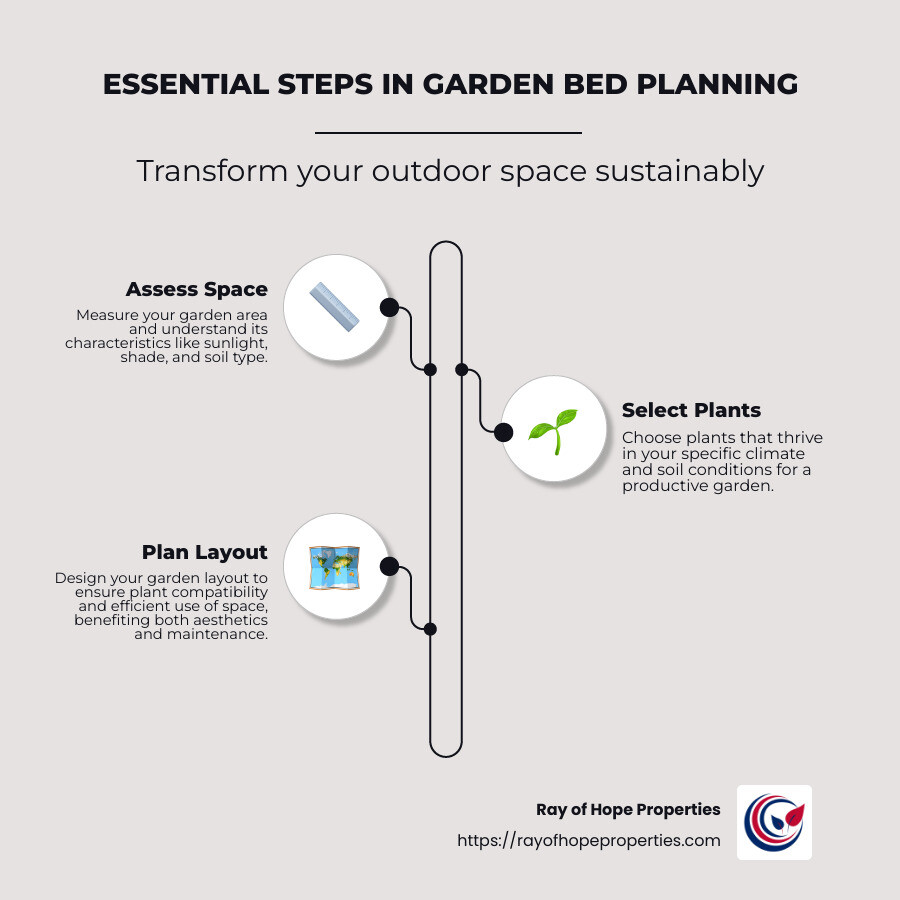
Garden bed planning is the cornerstone of changing any outdoor space into a flourishing garden. Whether you possess expansive land or a cozy corner in Tuscaloosa, a detailed plan ensures that each plant receives the optimal conditions to thrive. Here’s what effective garden bed planning involves:
- Assess Space: Determine the dimensions and characteristics of your garden area.
- Select Plants: Choose plants suited to your climate and soil.
- Soil Preparation: Consider soil structure and additives like mulch or compost.
- Layout Design: Plan for accessibility and plant compatibility.
- Irrigation and Maintenance: Set up efficient watering systems and care routines.
By incorporating sustainable practices, you not only improve the beauty of your garden but also contribute positively to the environment. Sustainable methods such as using raised beds with untreated wood and integrating mulch can improve drainage and soil health while reducing the need for chemical fertilizers.
At Ray of Hope Properties, we specialize in creating vibrant, sustainable outdoor spaces that balance aesthetic appeal with ecological mindfulness. We believe a well-planned garden bed is a testament to thoughtful design and responsible stewardship of the land.
Understanding Garden Bed Planning
When it comes to garden bed planning, three key techniques can make all the difference: square-foot gardening, crop rotation, and plant spacing. These methods ensure your garden thrives and stays productive season after season.
Square-Foot Gardening
Square-foot gardening is a simple yet effective method for maximizing space in your garden. Instead of planting in traditional long rows, you divide your garden bed into small, manageable square-foot sections. Each section is home to a specific number of plants, based on their size and growth habits. This approach not only helps in organizing your garden but also makes it easier to manage and maintain.
For instance, in a single square foot, you might plant one tomato or 16 carrots. This method encourages intensive planting, reducing weeds and conserving water. It’s a fantastic way to get the most out of small spaces, especially in urban settings like Tuscaloosa.
Crop Rotation
Crop rotation is vital for maintaining soil health and preventing pest and disease buildup. By rotating different plant families in your garden beds each year, you can avoid depleting the soil of specific nutrients and reduce the risk of pests and diseases that target particular plant families.
Consider this approach:
- Allium Family: Chives, garlic, onions
- Solanaceae Family: Tomatoes, peppers
- Brassica Family: Broccoli, kale
Each year, move these families to a different bed. This practice not only keeps your soil rich and fertile but also ensures a bountiful harvest.
Plant Spacing
Proper plant spacing is crucial for healthy growth. Overcrowding plants can lead to competition for sunlight, water, and nutrients, resulting in weaker plants and smaller yields. It also increases the risk of diseases due to poor air circulation.
Follow the spacing guidelines on seed packets or plant labels. For example, tomatoes typically need about 18 to 24 inches between plants, while lettuce can be spaced 6 to 12 inches apart. This attention to spacing helps each plant access the resources it needs to thrive.
By embracing these techniques, you can transform your garden into a thriving oasis. At Ray of Hope Properties, we help you implement these methods to create a harmonious and productive garden that reflects your personal style and environmental values.
Designing Your Garden Bed Layout
Designing your garden bed layout is a crucial step in maximizing the productivity and beauty of your garden. With a well-thought-out plan, you can ensure every plant has the space and conditions it needs to thrive. Let’s explore some essential techniques for mapping and sketching your garden area.
Mapping Garden Beds
Mapping your garden beds helps you visualize how everything will fit together. Start by measuring your garden space and sketching a rough map. On your map, include existing structures like trees, fences, and pathways. This will help you see where the sun hits and where shade falls, which is vital for deciding where to plant sun-loving versus shade-tolerant plants.
For example, tall plants like tomatoes and trellised beans should be placed where they won’t cast shadows on shorter plants. This typically means planting them on the north side of your garden beds.
Sketching the Garden Area
Next, sketch your garden area in more detail. Break it down into sections or plots based on your map. This is where square-foot gardening comes in handy; divide your garden into small, manageable squares. Each square can then be allocated to specific plants or plant families.
Using graph paper or a digital garden planner can make this process easier. It allows you to move things around until you find the perfect layout. The goal is to optimize space and ensure every plant gets what it needs.
Plotting Plants
Once your layout is sketched, it’s time to plot your plants. Consider the needs of each plant, such as sunlight, water, and spacing requirements. Group plants with similar needs together. This not only makes it easier to care for them but also helps with crop rotation in future seasons.
For instance, in one section, you might plot leafy greens like lettuce and spinach. In another, root vegetables like carrots and radishes. This method ensures that you’re making the most of your space and resources.
Also, don’t forget to plan for succession planting. This involves planting different crops in the same space at different times of the year to maximize your harvest. For example, after harvesting spring lettuce, you might plant summer beans in the same spot.
By carefully mapping, sketching, and plotting your garden beds, you lay the foundation for a successful and productive garden. At Ray of Hope Properties, we believe in creating garden spaces that reflect your unique style and support sustainable practices.
Essential Techniques for Productive Garden Beds
Once your garden layout is planned, it’s time to focus on essential techniques that will keep your garden productive throughout the growing season. Let’s look at three key strategies: succession planting, growing vertical, and managing your winter storage inventory.
Succession Planting
Succession planting is a smart way to make the most of your garden space. This technique involves planting different crops in the same area at different times of the year. It ensures you have a continuous harvest without leaving any plot empty for too long.
For instance, start with quick-growing crops like spinach and lettuce in early spring. Once these are harvested, plant summer crops like bush beans or cucumbers. As summer crops finish, you can plant fall greens like kale or Swiss chard. This method keeps your garden beds productive and provides a varied harvest throughout the year.
Growing Vertical
Vertical gardening is a fantastic way to maximize space, especially in smaller gardens. By using trellises, cages, or stakes, you can grow plants upwards rather than outwards. This is particularly beneficial for vining plants like peas, pole beans, and indeterminate tomatoes.
Placing these vertical structures on the north side of your garden beds prevents them from shading other plants. Not only does this technique save space, but it also improves air circulation and reduces the risk of diseases.
Winter Storage Inventory
Before planting, take stock of what you have left from last year’s harvest. This winter storage inventory helps you decide how much to plant for the current year. If you’re running low on canned tomatoes, you might plan to grow more tomato plants. If you have plenty of pickled beets, you might reduce the number of beet plants.
Keeping track of your preserved garden bounty ensures you grow enough to meet your needs without overplanting. It also helps in planning your crop rotation, as you can adjust plant numbers based on what you have stored.
By implementing succession planting, growing vertical, and managing your winter storage inventory, you can ensure your garden beds remain productive and efficient. These techniques not only maximize your harvest but also support sustainable gardening practices. At Ray of Hope Properties, we strive to help you create a garden that thrives year-round, reflecting your personal style and commitment to eco-friendly living.
Building and Maintaining Raised Garden Beds
Raised garden beds are a great way to grow plants, especially if your soil isn’t perfect. They offer better drainage, prevent soil compaction, and make gardening easier on your back. Let’s explore some key aspects of building and maintaining raised garden beds.
Raised Garden Bed Plans
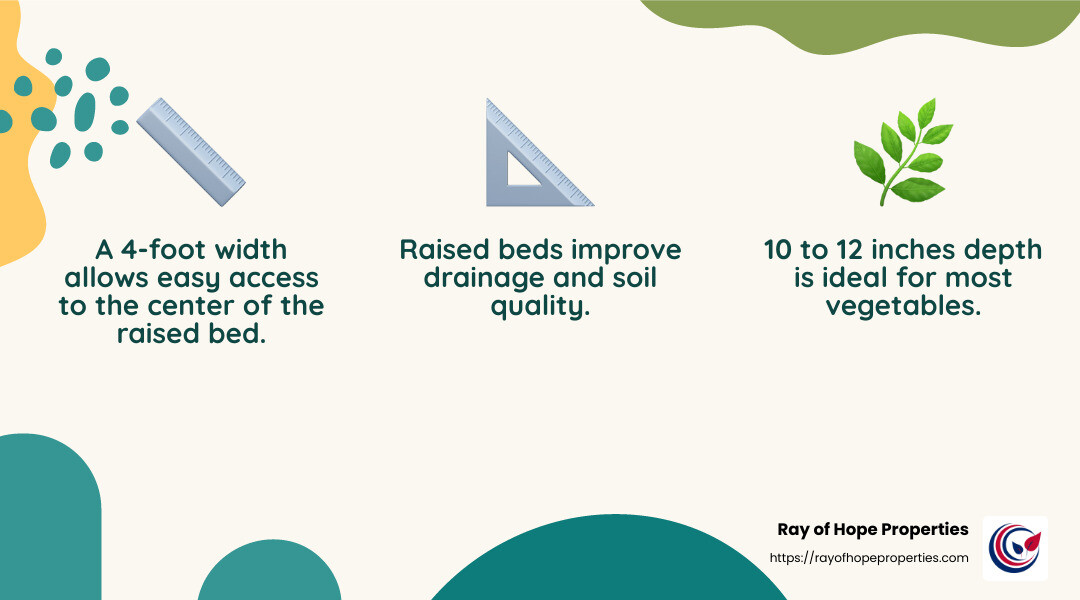
When planning your raised garden bed, consider the size and location. Ideally, beds should be no wider than four feet so you can reach the center without stepping on the soil. Length can vary based on your space, but keep in mind that you’ll need to fill these beds with soil, which can get expensive for very large beds.
Pro tip: Start with a simple rectangular design. This shape is easy to build and fits well in most yards.
Building Materials
Selecting the right materials is crucial for the longevity and safety of your garden bed. Avoid pressure-treated wood, as it can leach chemicals into the soil. Instead, consider these options:
- Cedar: Naturally resistant to rot and insects. It’s a bit pricier but lasts longer.
- Metal or Aluminum: Durable and comes in various colors and designs. Brands like Vego Garden offer stylish options.
- Cement Blocks: For a more permanent and sturdy structure, especially in areas with harsh weather.
For added protection, seal wooden beds with a non-toxic sealant like Garden Seal.
Irrigation Systems
Keeping your raised beds well-watered is essential. While you can water manually, installing an irrigation system can save time and ensure consistent moisture levels. A drip irrigation system is highly recommended. It delivers water directly to the plant roots, minimizing evaporation and conserving water.
DIY Tip: You can set up a simple drip system using soaker hoses connected to a timer. This setup is cost-effective and efficient.
By carefully planning your raised garden beds, choosing the right materials, and setting up an efficient irrigation system, you can create a thriving garden that’s easy to maintain. At Ray of Hope Properties, we’re here to help you build beautiful and productive garden spaces custom to your needs.
Next, let’s address some Frequently Asked Questions about Garden Bed Planning to clear up any uncertainties you might have.
Frequently Asked Questions about Garden Bed Planning
How do I calculate soil needed for a raised bed?
To calculate the amount of soil needed for your raised bed, you’ll need to know the dimensions of the bed: length, width, and depth. The formula to find the volume of soil required is simple:
Volume = Length x Width x Depth
Make sure all measurements are in the same units (feet or meters work best). For example, if your bed is 4 feet long, 3 feet wide, and 1 foot deep, you would need:
Volume = 4 x 3 x 1 = 12 cubic feet of soil
This calculation ensures you have enough soil to fill the bed without leaving gaps.
What is the best size for a raised garden bed?
The ideal size for a raised garden bed is one that allows you to reach all areas without stepping on the soil. Four feet wide is a common recommendation because it lets you reach the center from either side comfortably. The length can vary based on your available space, but keep it manageable to avoid excessive soil costs.
For depth, 10 to 12 inches is typically sufficient for most vegetables, including root crops like carrots. If you have mobility issues or want to grow deeper-rooted plants, consider making the bed higher.
How can I prevent pests in my garden beds?
Preventing pests in your garden beds involves a combination of strategies:
- Crop Rotation: Change the location of plant families each year to disrupt pest life cycles. For example, rotate members of the Solanaceae family like tomatoes and peppers to different beds annually.
- Companion Planting: Plant pest-repelling plants such as marigolds or basil alongside your vegetables. These can deter harmful insects.
- Physical Barriers: Use row covers or netting to protect plants from flying pests. Attaching hoops to your raised beds makes it easy to add these covers.
- Regular Inspection: Check plants regularly for signs of pests and take immediate action if you spot any. Hand-picking and using organic pest control methods can be effective.
By implementing these practices, you can minimize pest damage and enjoy a healthier garden.
Armed with these answers, you’re better prepared to tackle garden bed planning with confidence. Whether you’re calculating soil needs, deciding on bed sizes, or keeping pests at bay, these tips will help you create a thriving garden.
Conclusion
At Ray of Hope Properties, we believe that successful garden bed planning can transform your outdoor space into a vibrant oasis. Our expertise in landscaping in Tuscaloosa, AL, allows us to offer personalized solutions that cater to your specific needs and preferences.
Personalized Solutions: Every garden is unique, just like its owner. We take the time to understand your vision, lifestyle, and the specific conditions of your yard. This way, we can design a garden bed that not only looks beautiful but also thrives in its environment. From selecting the right plants to planning the layout, our team ensures that your garden reflects your personal taste and meets your functional needs.
Eco-Friendly Practices: Sustainability is at the heart of what we do. We use eco-friendly materials and methods to ensure that your garden bed supports a healthy ecosystem. Whether it’s using untreated wood for raised beds or implementing drip irrigation systems to conserve water, our practices aim to minimize environmental impact while maximizing garden productivity.
By choosing Ray of Hope Properties, you’re not just getting a garden bed; you’re investing in an outdoor space that improves your quality of life. Our commitment to personalized solutions and eco-friendly practices ensures that your garden will be a source of beauty and sustainability for years to come.
Ready to transform your yard? Find more about our landscaping services in Tuscaloosa, AL and let us help you create the garden of your dreams.


