

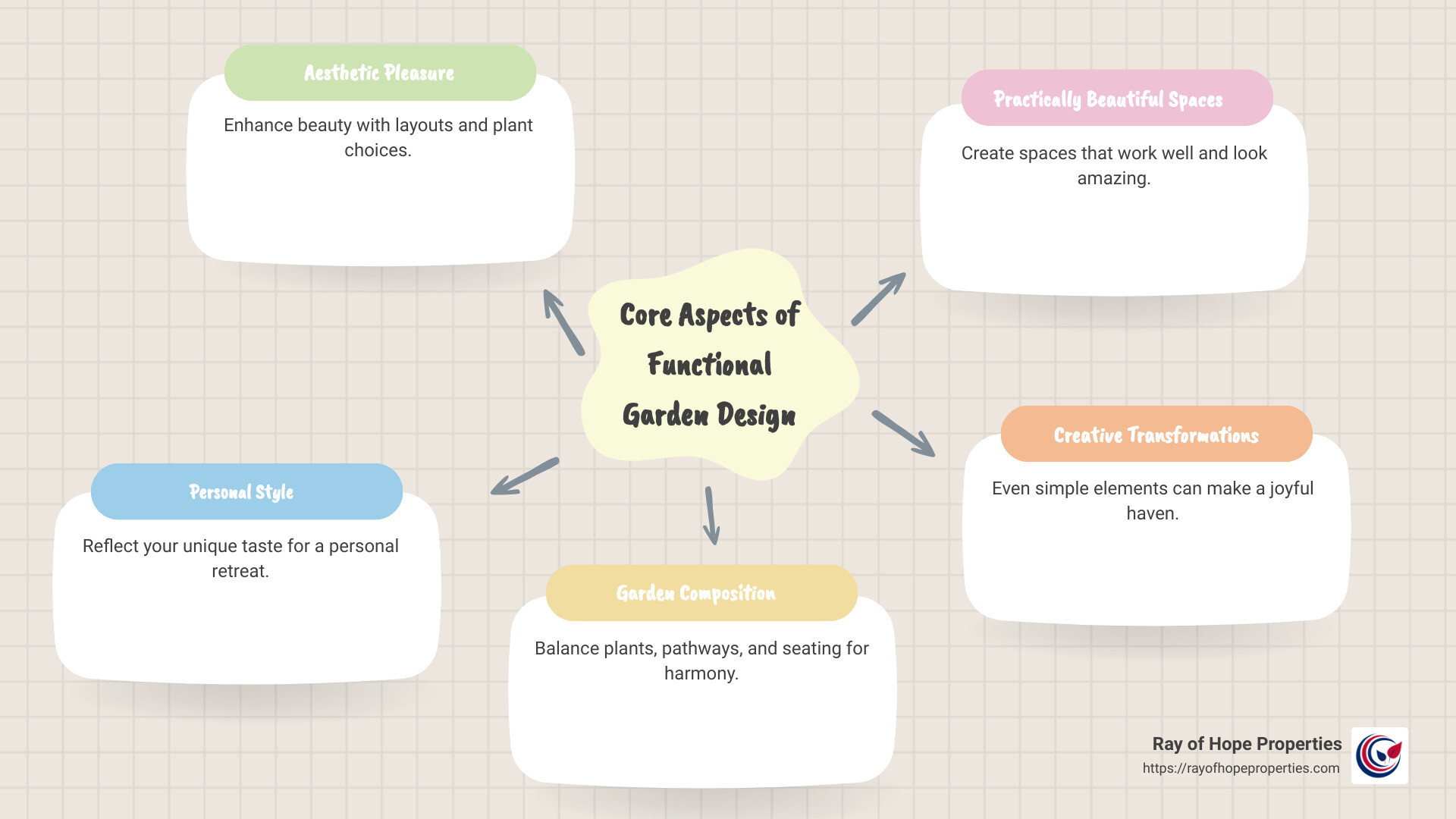
Functional garden design is all about creating outdoor spaces that not only look good but work exactly how you need them to. Whether you’re crafting a tranquil corner for relaxation or a vibrant yard for business clients, functional garden design helps marry aesthetics with practicality.
- Aesthetic Pleasure: Enjoy more than just greenery. Use your garden to express beauty through well-thought-out layouts and plant choices.
- Personal Style: Reflect your unique taste. Your garden should feel like your personal retreat or the perfect welcoming space for clients.
- Garden Composition: Balance elements like plants, pathways, and seating areas to create a harmonious and inviting atmosphere.
When planning your garden design, consider these core aspects as the foundation for a space that’s both practical and beautiful. With a creative approach, even the simplest elements can transform your outdoor area into a joyful haven or an impressive business front.
Principles of Functional Garden Design
Designing a functional garden is like solving a puzzle. You want each piece to fit perfectly, creating a space that’s both useful and beautiful. Here are the key principles to keep in mind:
Boldness
Be bold with your choices. Garden designer Patrick Thevenard advises, “By being bold, you may go wrong, but by being cautious and hesitant, you will definitely go wrong.” Don’t shy away from making a statement with your garden. Boldness can mean using large curves instead of narrow strips, or planting a tree that will grow tall and strong. This approach not only makes your garden more dynamic but also ensures it feels expansive and inviting.
Plant Placement
Where you place your plants is crucial. Avoid the common mistake of planting in straight lines, unless that’s your specific intention. Straight lines can make your garden look too formal and rigid. Instead, think of your garden as a canvas. Use plants to create flow and movement, grouping them in odd numbers like threes or fives for a more natural look. Trees should serve a purpose, such as providing shade or fruit, rather than just being decorative.
Spatial Flow
Create a sense of flow. Your garden should feel like it’s guiding you through an experience. Paths and walkways should be minimal and functional, allowing plants to overlap and blend with the hardscape. This approach helps unite different parts of the garden, making it feel like a cohesive whole. Consider how stepping-stone-style paving can echo architectural elements of your home, creating a seamless transition from indoors to outdoors.
Hardscape Importance
Hardscapes are the backbone of your garden. They provide structure and define spaces. Think of them as the bones of your garden design. Use hardscapes like pathways, patios, and raised beds to organize the space. In functional gardens, hardscapes should be simple and purposeful, avoiding unnecessary decoration. Instead, let the form of the hardscape improve the garden’s functionality and aesthetic.
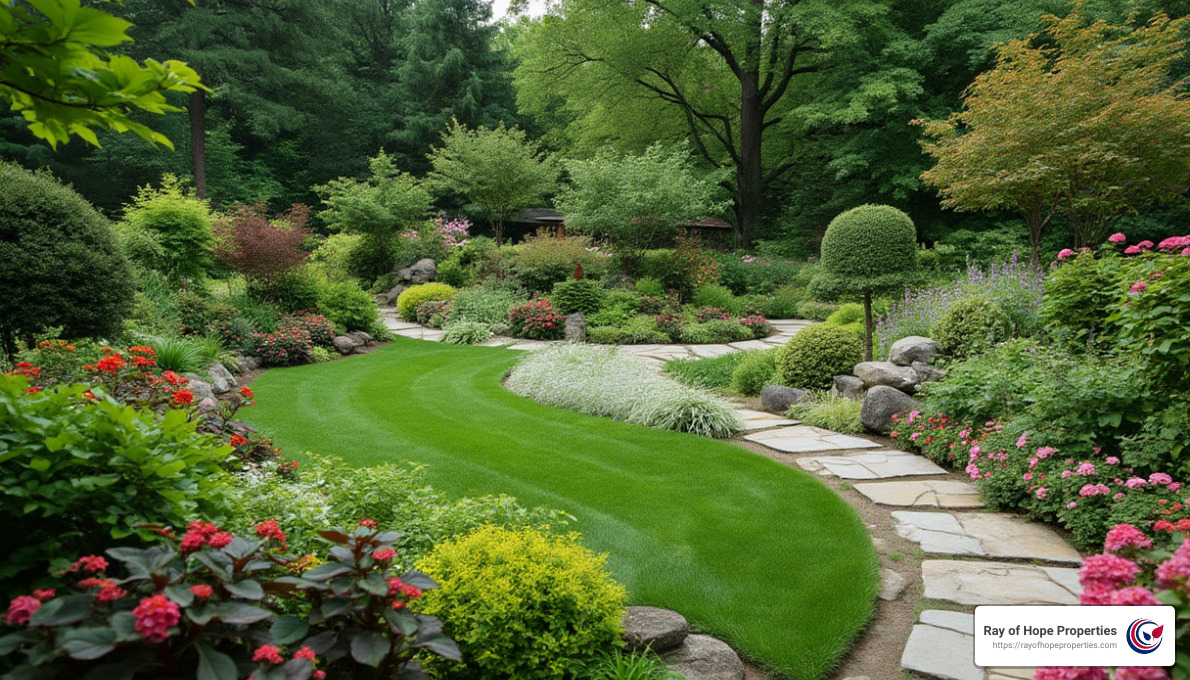
By focusing on these principles, your garden will not only look stunning but will also serve your needs perfectly. Whether it’s a place for relaxation or a productive vegetable patch, a functional garden design ensures your outdoor space works just as hard as it looks.
Types of Functional Gardens
When it comes to functional garden design, choosing the right type of garden can make all the difference. Let’s explore some options that can transform your outdoor space into a functional and beautiful haven.
Urban Garden
Urban gardens are perfect for small spaces like balconies or tiny yards. They maximize every inch with vertical planting, pots, and hanging baskets. Think of them as the compact cars of the gardening world. They are efficient and stylish, making them ideal for city dwellers who want a splash of green without a lot of space.
Raised Bed Garden
Raised bed gardens are all about organization and efficiency. They allow you to control soil quality and drainage easily. Plus, their elevation makes planting and harvesting a breeze. They’re perfect for growing vegetables or flowers in neat, tidy rows. Use non-treated wood to ensure a healthy environment for your plants.
Vegetable Garden
A vegetable garden is a classic choice for those who love fresh produce. Growing your own veggies means you get to enjoy fresh, organic food right from your backyard. It’s also a great way to save money and reduce trips to the grocery store. While it requires effort, the satisfaction of harvesting your own food is worth it.
Flower Garden
Flower gardens are all about color and fragrance. Whether you prefer a single type of flower, like roses, or a mix of varieties, a flower garden can brighten any space. Choose plants that bloom at different times to ensure your garden is always bursting with color.
Herb Garden
Herb gardens are simple and low-maintenance. They can be as small as a few pots on a windowsill or as large as a dedicated garden bed. Herbs like basil, thyme, and rosemary are not only useful in the kitchen but also add a pleasant aroma to your space.
Container Garden
Container gardens offer flexibility and creativity. You can use anything from traditional pots to old wheelbarrows to grow your plants. They are perfect for patios and small spaces, allowing you to move plants around easily to catch the sun or shade.
Indoor Garden
For those who prefer to keep their gardening indoors, indoor gardens are a fantastic option. They can range from simple potted plants to complex setups with climate control. Indoor gardens are great for regions with harsh climates or for those who simply love the idea of bringing nature inside.
Each type of garden has its own set of benefits and can be custom to fit your needs and space. Whether you’re looking for a productive vegetable patch or a serene flower garden, there’s a functional garden design that can work for you.
Next, we’ll explore how to incorporate hardscapes into your garden design to improve both functionality and aesthetics.
Designing with Hardscapes
When creating a functional garden design, hardscapes play a crucial role in shaping the space. They provide structure and support for both the plants and people who use the garden. Let’s explore how you can effectively incorporate hardscapes into your garden.
Spatial Needs
First, consider the spatial needs of your garden. Hardscapes, such as paths, patios, and walls, help define areas and guide movement. They ensure that the garden is not only beautiful but also practical. Think of hardscapes as the skeleton of your garden—without them, your space can feel chaotic and overcrowded.
Visual Flow
Creating a visual flow is essential for a cohesive garden design. Hardscapes guide the eye and lead visitors through the garden. By using paths or stepping stones, you can direct attention to key areas or focal points. This helps make the garden feel more expansive and inviting.
Focal Points
Focal points are the stars of your garden. They might be a beautiful tree, a sculpture, or a water feature. Use hardscapes to frame these focal points and make them stand out. For instance, a winding path leading to a bench under a tree can create a moment of pause and appreciation.
Asymmetrical Placement
Asymmetrical placement adds interest and surprise to a garden. Instead of aligning everything in neat rows, place elements slightly off-center. This encourages exploration and findy. Imagine a path that curves around a corner, revealing a hidden seating area or a unique plant. Asymmetry keeps the garden dynamic and engaging.
Hardscape Materials
The materials you choose for your hardscapes are just as important as their placement. Opt for materials that complement the style of your garden and the architecture of your home. Natural stone, brick, and wood are popular choices that add warmth and texture. Consider durability and maintenance when selecting materials to ensure they stand the test of time.
Incorporating hardscapes into your garden design improves both its functionality and aesthetics. By focusing on spatial needs, visual flow, focal points, and material selection, you can create a garden that is not only beautiful but also practical and enjoyable.
Next, we’ll share some functional garden design tips to help you make the most of your outdoor space.
Functional Garden Design Tips
Creating a garden that is both beautiful and functional doesn’t have to be complicated. Here are some practical tips to help you make the most of your outdoor space.
Shade Trees
Shade trees are essential in a functional garden. They provide relief from the sun and create a cool, inviting environment. According to the Swedish Garden Architects’ Association, trees should serve a purpose, such as providing shade or fruit. When selecting trees, consider their mature size to ensure they fit well within your space.
Plant Repetition
Using repetition in your plant choices can create a sense of unity and harmony in your garden. Repeating plants with similar forms or colors helps tie the garden together, making it feel more cohesive. This approach is particularly effective in functional garden design, where the goal is to create a space that flows naturally.
Color and Texture Contrast
Contrast is key to keeping your garden visually interesting. Mix plants with different colors and textures to create depth and dimension. For instance, pairing plants with bold, dark leaves with those that have light, airy foliage can make each plant stand out. This contrast can be achieved through careful selection and placement of plants that complement each other.
Garden Art
Incorporating art into your garden adds personality and flair. Whether it’s a sculpture, a birdbath, or a simple garden ornament, art can serve as a focal point or accent. However, it’s important to use garden art sparingly to avoid clutter. Choose pieces that improve the overall design without overwhelming it.
Impulse Control
When designing your garden, it’s easy to get carried away with exciting new plants and ideas. Practice impulse control by sticking to a well-thought-out plan. This ensures that every element in your garden has a purpose and contributes to the overall design. Simplicity often leads to the most neat results.
By considering these tips, you can craft a garden that is not only visually appealing but also functional and enjoyable to use. Next, we’ll address some frequently asked questions about functional garden design to help you further refine your space.
Frequently Asked Questions about Functional Garden Design
How do you design a functional landscape plan?
Designing a functional landscape plan involves thoughtful planning and creativity. Start by assessing your needs: Do you want a space for relaxation, gardening, or entertaining? Once you have a clear vision, sketch a rough layout. Consider the flow of movement through the space and how different areas will be used. Incorporate essential elements like pathways, seating, and planting zones.
To make the process easier, consider using the myGarden app. This online application helps you visualize your ideas and experiment with different layouts. It offers tools for planning plant placement, selecting the right plants for your climate, and ensuring everything fits together harmoniously. This creative planning tool can be a game-changer in crafting a landscape that works for you.
What are the three types of garden?
When considering different garden types, three popular options often stand out: native perennial gardens, vegetable gardens, and pollinator-friendly gardens.
Native Perennial Gardens: These gardens focus on plants that naturally thrive in your region. They require less maintenance and are more sustainable since they are well-adapted to local conditions. Native plants often attract local wildlife, adding to the garden’s ecological value.
Vegetable Gardens: As highlighted in our research, vegetable gardens are fulfilling and practical. They provide fresh produce, reduce grocery bills, and offer a rewarding gardening experience. You can start small with a few raised beds or containers if space is limited.
Pollinator-Friendly Gardens: These gardens are designed to attract bees, butterflies, and other pollinators. By planting a variety of flowering plants, you can support local ecosystems and enjoy a lively, colorful garden. Choose plants with different blooming times to ensure a continuous food source for pollinators throughout the growing season.
Is there an app to help me design my garden?
Yes, the myGarden app is a fantastic tool for garden design. This online application allows you to plan your garden layout, select suitable plants, and visualize the final design before you start planting. It offers a user-friendly interface that makes creative planning accessible to both beginners and experienced gardeners. By using this app, you can experiment with different designs and find the perfect arrangement for your space.
Conclusion
At Ray of Hope Properties, we believe that a well-designed garden is more than just a pretty space—it’s a functional, sustainable extension of your home. Our approach to functional garden design is rooted in creating personalized solutions that meet your unique needs and preferences. Whether you’re looking to cultivate a vibrant vegetable garden, a serene flower oasis, or a practical herb garden, our team is here to make your vision a reality.
Personalized Solutions: We start by understanding your goals and the specific requirements of your outdoor space. Our experts work closely with you to design a garden that reflects your personal style while maximizing functionality. From selecting the right plants to choosing eco-friendly materials, every decision is custom to create a harmonious and practical garden environment.
Eco-Friendly Practices: Sustainability is at the core of our design philosophy. By incorporating native plants and eco-friendly practices, we help promote a balanced ecosystem in your yard. This approach not only improves the beauty and health of your garden but also supports local wildlife and reduces maintenance needs.
Changing your outdoor space into a functional garden is an exciting journey, and we’re here to guide you every step of the way. Trust Ray of Hope Properties to deliver expert landscaping services that lift your yard into a sustainable and beautiful retreat.
For more information about our services, visit our service page. Let’s create a garden that works for you and the environment!


