

Eco-friendly yard care is all about transforming your outdoor spaces into thriving, sustainable environments without harming the planet. For homeowners and small business owners who seek beauty and sustainability in their landscapes, adopting eco-friendly practices ensures a welcoming space that is both visually appealing and environmentally responsible.
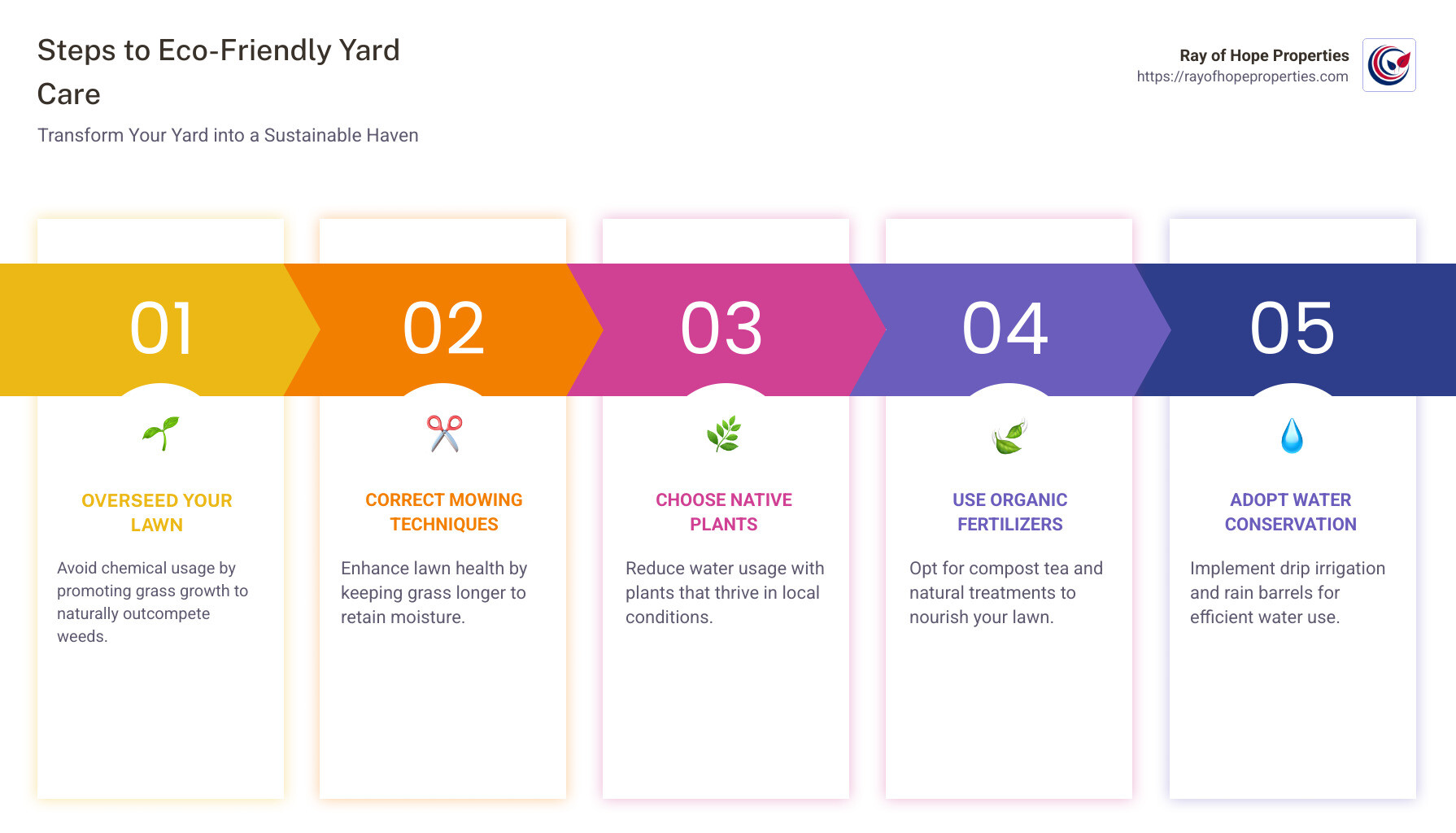
Here’s a quick overview of how you can achieve this:
- Overseed your lawn to avoid chemical use
- Mow correctly to improve lawn health naturally
- Choose native plants to reduce water use
- Use organic fertilizers and compost tea
- Adopt water conservation techniques like drip irrigation
These steps not only improve biodiversity but also promote water conservation, allowing your yard to contribute positively to local ecosystems.
Eco-friendly yard care offers a myriad of benefits, from reducing greenhouse gases to conserving water. By integrating these sustainable yard care practices, you not only ensure the health of your lawn but also contribute to a healthier planet.
Eco-Friendly Yard Care Essentials
Maintaining a beautiful yard while being kind to the planet is easier than you might think. Here are some eco-friendly yard care essentials to get you started:
Lawn Maintenance Techniques
- Mulching and Wood Chips
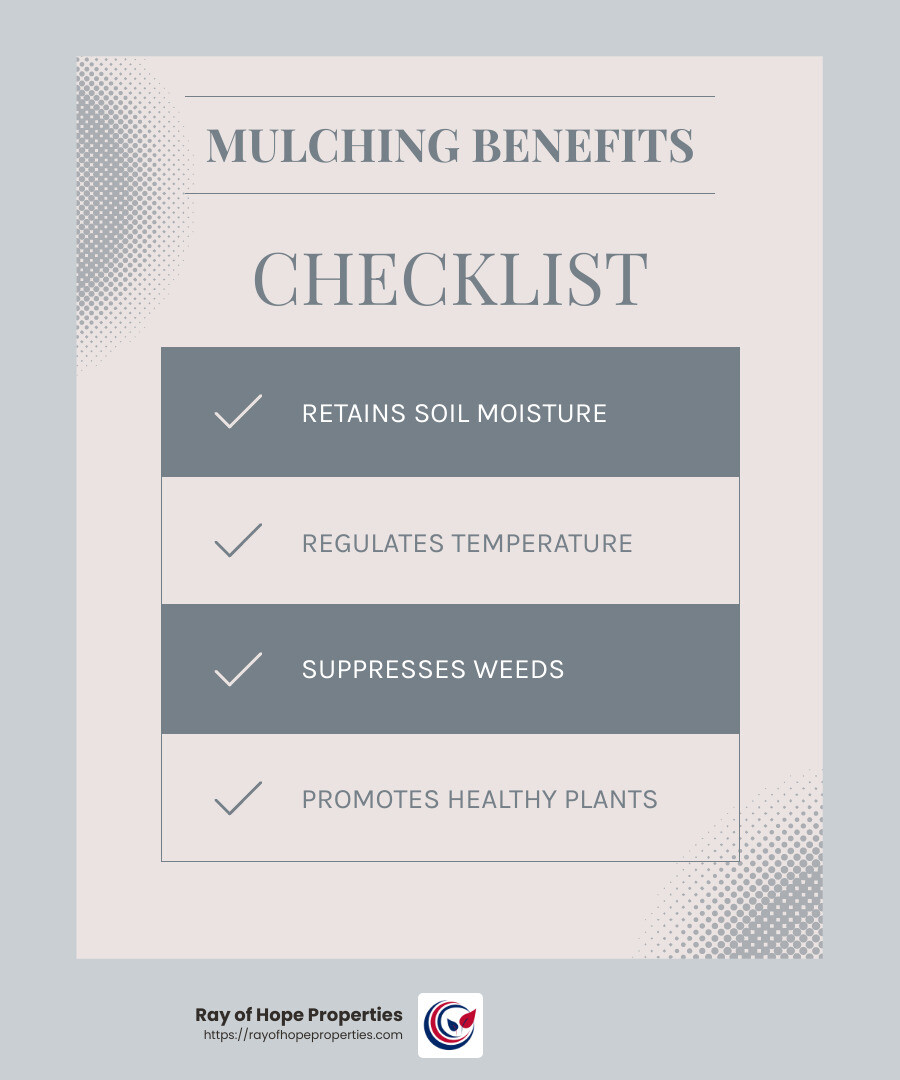
Mulching is not just for aesthetics; it plays a crucial role in soil conservation. By applying mulch or wood chips, you help retain soil moisture, regulate temperature, and suppress weeds. This creates a thriving environment for plants. At Ray of Hope Properties, we use premium organic materials to ensure your landscape remains both beautiful and sustainable.
Longer Grass
Letting your grass grow a bit longer can benefit your lawn’s health. Longer grass shades the soil, reducing water evaporation and helping to crowd out weeds naturally. This simple step reduces the need for chemical herbicides and keeps your lawn lush and green.Composting
Composting is a natural way to recycle nutrient-rich lawn clippings. By returning these nutrients to the soil, you promote healthy plant growth and reduce the need for synthetic fertilizers. Composting is a win-win: it reduces yard waste and improves soil fertility.
Water Conservation Strategies
- Rainwater Use and Rain Barrels
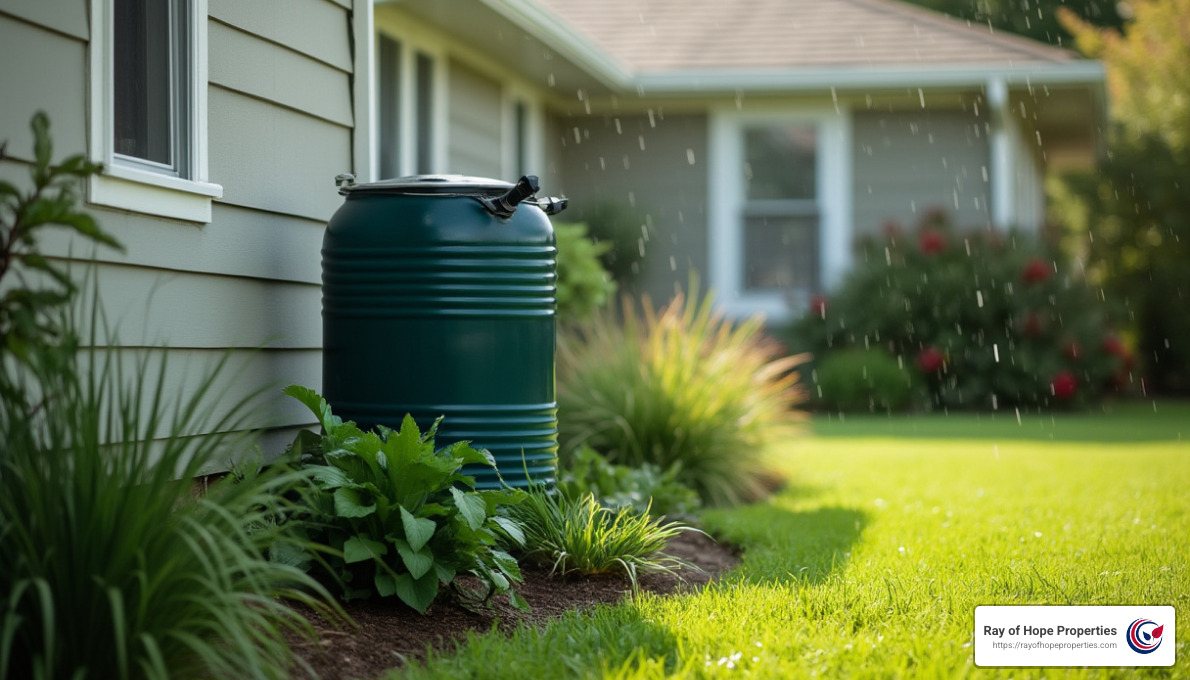
Collecting rainwater is an effective way to conserve water. A rain barrel can collect significant amounts of water, which can then be used for your lawn and garden. This practice not only saves water but also reduces runoff, helping to maintain natural waterways.
- Drip Irrigation
Drip irrigation systems deliver water directly to plant roots, minimizing evaporation and runoff. This method is highly efficient and ensures your plants get just the right amount of water they need to thrive. By using drip irrigation, you conserve water and promote healthier plant growth.
By integrating these eco-friendly yard care techniques, you can create a sustainable and beautiful outdoor space that benefits both your home and the environment. These practices not only save resources but also improve the biodiversity of your yard, making it a haven for local wildlife and a delight for visitors.
Chemical-Free Lawn Solutions
Creating a lush, green lawn without chemicals is not only possible but also beneficial for the environment. Let’s explore some eco-friendly yard care solutions that promote a healthier lawn.
Natural Fertilization Methods
1. Composting and Lawn Clippings
Composting is an excellent way to recycle organic waste and enrich your soil. By composting kitchen scraps and yard waste, you create a nutrient-rich mixture that feeds your lawn naturally. Lawn clippings can also be left on the grass after mowing; they decompose and return valuable nutrients to the soil, reducing the need for synthetic fertilizers.
2. Nutrient Recycling
Nutrient recycling involves using natural materials to replenish the soil. Incorporating compost or aged manure into your lawn care routine helps improve soil structure and fertility. This method supports healthy grass growth and reduces the reliance on chemical fertilizers.
3. Clover Lawn
Consider planting clover in your lawn. Clover is a nitrogen-fixing plant, which means it naturally enriches the soil with nitrogen, reducing the need for fertilizers. It also stays green during dry spells and is more resistant to pests, making it a resilient option for eco-friendly lawns.
Pest and Weed Control
1. Natural Barriers
Using natural barriers like hedges or native plants can help keep pests at bay. These barriers create habitats for beneficial insects that prey on common lawn pests. By encouraging these natural predators, you reduce the need for chemical pesticides.
2. No-Maintenance Zones
Designating no-maintenance zones in your yard can be a great way to support biodiversity. Areas with native plants or wildflowers require less upkeep and provide habitats for pollinators and other wildlife. These zones also help control weeds naturally by outcompeting them for resources.
3. Resilient Grass
Choosing resilient grass varieties that are well-suited to your local climate can significantly reduce pest and weed problems. These grasses are often more drought-tolerant and require less fertilizer, making them ideal for sustainable lawn care. Letting your grass grow slightly longer also helps shade out weeds and retain soil moisture.
By implementing these chemical-free lawn solutions, you can maintain a vibrant, healthy lawn that is safe for your family, pets, and the environment. These practices not only improve the beauty of your yard but also contribute to a more sustainable ecosystem.
Environmentally Friendly Ground Covers
When it comes to eco-friendly yard care, choosing the right ground cover is key. Ground covers can reduce the need for watering, mowing, and chemical treatments. Let’s explore some options that work well in various lighting conditions.
Perennial Options
Perennial ground covers are an excellent choice for sustainable landscaping. They come back year after year, reducing the need for replanting. Some popular perennial options include:
Creeping Thyme: This fragrant herb forms a dense mat and produces tiny purple flowers. It’s drought-tolerant and thrives in well-drained soil.
Ajuga (Bugleweed): Known for its colorful foliage and spikes of blue flowers, Ajuga is great for filling in shady areas.
These plants not only beautify your yard but also provide habitats for beneficial insects.
Sun-Loving Plants
For areas that receive plenty of sunlight, consider these sun-loving ground covers:
Sedum (Stonecrop): Sedum varieties are succulent plants that store water in their leaves, making them perfect for dry, sunny spots. They come in various colors and textures.
Ice Plant: With its bright, daisy-like flowers, the Ice Plant adds a splash of color to sunny areas. It requires minimal water and maintenance.
These sun-loving plants are resilient and will thrive with little attention, making them ideal for eco-friendly yard care.
Shade-Loving Plants
Shady areas can be challenging, but the right shade-loving ground covers can thrive with minimal sunlight:
Hosta: Known for its lush foliage, Hosta comes in various shades of green and variegated patterns. It’s perfect for creating a lush, green carpet in shaded areas.
Pachysandra: This evergreen ground cover is ideal for dense shade. It spreads quickly and helps suppress weeds.
By selecting the appropriate ground covers for your yard’s conditions, you can create a beautiful, sustainable landscape that requires less water and maintenance. These plants not only improve the aesthetic appeal of your yard but also contribute to a healthier environment.
Frequently Asked Questions about Eco-Friendly Yard Care
How can I make my yard more environmentally friendly?
Making your yard more environmentally friendly starts with yard waste reduction. Instead of bagging leaves and grass clippings, use them as mulch or compost. This not only reduces waste but also enriches your soil naturally.
Pollinator support is another crucial aspect. Planting native flowers and shrubs can provide food and habitat for bees, butterflies, and other pollinators. Aim for a mix of plants that bloom at different times to support pollinators year-round.
Consider creating no-maintenance zones. These are areas where you let nature take its course by allowing native plants to grow freely. This approach reduces mowing and watering while supporting local wildlife.
What is eco-friendly lawn care?
Eco-friendly lawn care is all about practices that benefit your lawn and the environment. It involves choosing the right plants for your climate and soil to reduce water and fertilizer needs. Consider plant selection carefully. Native plants are often the best choice as they are adapted to the local climate and require less care.
Instead of using synthetic fertilizers, opt for organic solutions. Compost and natural fertilizers like bone meal can provide the nutrients your lawn needs without harming the ecosystem.
How to get a green lawn without chemicals?
Achieving a lush, green lawn without chemicals is possible with a few simple strategies. One unusual but effective method is using baby shampoo. A mixture of baby shampoo and water can help break down soil compaction, allowing roots to access more nutrients and water naturally.
For fertilization, rely on organic solutions. Compost tea, made by steeping compost in water, can be sprayed on your lawn to provide a nutrient boost. Lawn clippings left on the grass can also act as a natural fertilizer by recycling nutrients back into the soil.
By embracing these eco-friendly practices, you can maintain a beautiful yard that supports the environment. This not only conserves resources but also creates a healthier outdoor space for you and your community.
Conclusion
At Ray of Hope Properties, we believe that a beautiful yard shouldn’t come at the expense of the environment. Our commitment to sustainable practices ensures that your outdoor space is not only stunning but also eco-friendly. We offer personalized solutions custom to your needs, whether you’re looking to improve curb appeal or create a functional outdoor area.
Our approach to eco-friendly yard care includes using organic treatments and selecting plants that thrive in the local climate, reducing the need for water and chemicals. By focusing on native plants and sustainable landscaping techniques, we help you create a yard that supports local wildlife and conserves natural resources.
Our team is passionate about creating outdoor spaces that are both beautiful and environmentally responsible. We stay informed on the latest in sustainable practices to ensure that your yard contributes positively to the ecosystem.
Ready to transform your yard into an eco-friendly oasis? Contact us today to learn more about our personalized, sustainable solutions. Let’s work together to make your property a model of environmental stewardship.


